

Every position in this guide runs on the same chassis: the receiving partner faces away, the other partner works from behind. What actually separates them is chest height. With the receiving partner's chest held up on straight arms, the spine stays close to level and entry is shallow and easy to control. Drop the chest to the forearms and the hips tilt, the angle steepens, and depth arrives faster. Go fully flat and you reach the prone bone family — maximum body contact, minimal effort, and a shallower, snugger angle. That one dial explains most of the differences below.
The list runs easiest to hardest. The first four ask almost nothing of either partner and are worth learning as a set, because each one isolates a single adjustment. The middle of the list trades comfort for control in different ways, and the groundhog family at the end adds squatting, hooking, and folding that call for genuine leg strength and flexibility. You don't have to work through it in order — but when a position near the bottom isn't working, the fix is usually to step one rung back up the list rather than push harder.
The positions
Kneeling Doggy
This is the reference point for everything else in the roundup: hips level, chest partway down, no strength or flexibility asked of either partner. Get familiar with how it feels, because every other entry here is a deliberate change to one of its variables. Full entry in the glossary.
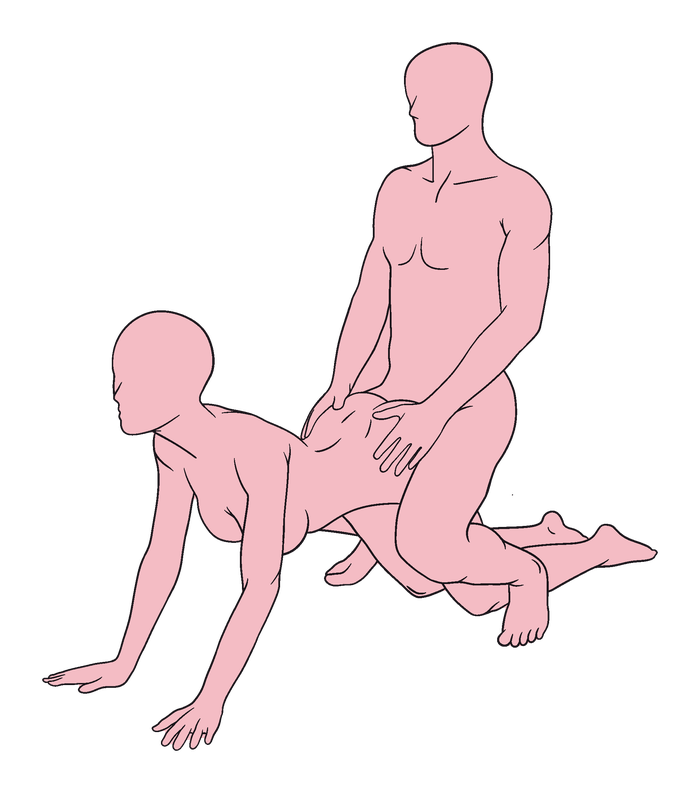
A stable rear-entry staple: one partner on all fours, the other kneeling upright behind their hips.
Lazy Doggy Style
The one to switch to when the receiving partner's arms give out mid-session — drop low to the surface and stay there. Expect a shallower angle and a little less control; that's the trade, not a flaw. Full entry in the glossary.
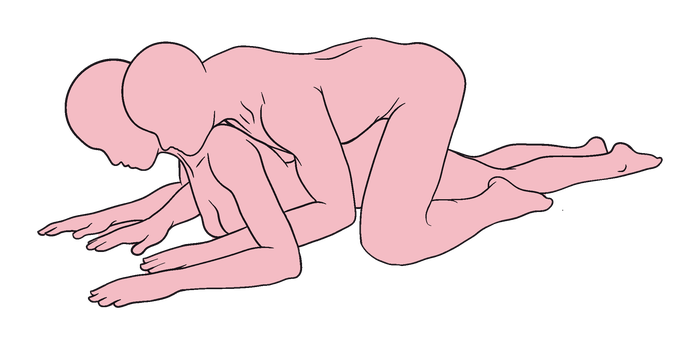
Chest-down and low to the bed — an easier-on-the-arms rear-entry variant.
Leapfrog
The halfway point between all fours and fully flat: chest and forearms down, hips still up. That drop steepens the entry angle noticeably, so start slower than you would in standard doggy — depth shows up sooner than expected. Full entry in the glossary.
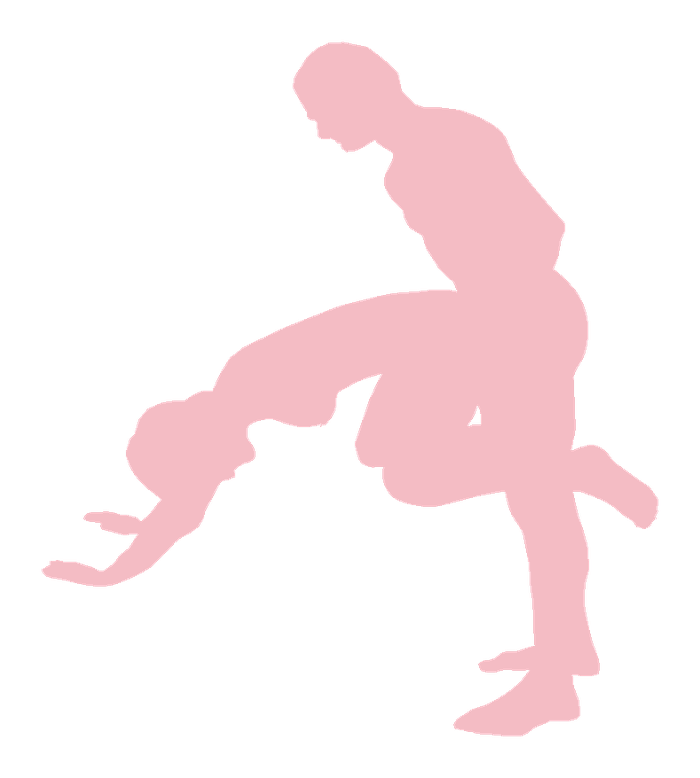
Chest and forearms down rather than fully upright — less arm strain than standard all-fours.
Upright Kneeling Doggy
Same base as kneeling doggy with everything drawn taller — the receiving partner up on straight arms, the partner behind fully upright on both knees with hands free for the hips. Grip is the whole point here — pace and depth get set from behind, so it's worth agreeing on both before you start. Full entry in the glossary.
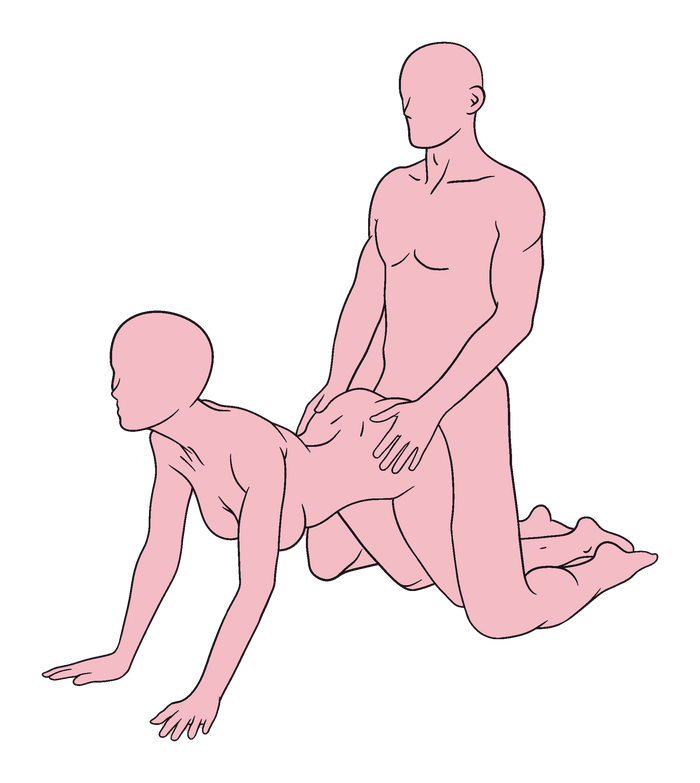
Classic all-fours doggy with the kneeling partner upright and tall, hands on the receiving partner's hips.
Doggy style
The classic name of the family, and the most adjustable position in it — the receiving partner raises or lowers their chest an inch and the angle follows. If you practice one entry on this list, make it this one; it teaches the mechanic every other position depends on. Full entry in the glossary.
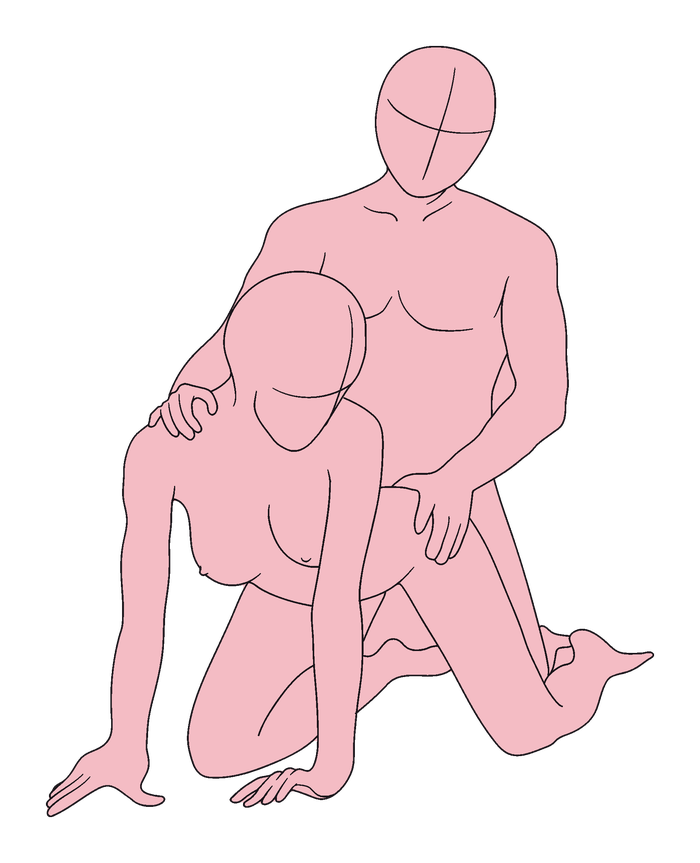
On hands and knees, other partner behind — chest and back angle adjust depth easily.
Prone Bone
The fully flat end of the spectrum: legs together, shallow angle, whole-body contact. The top partner's first job is weight management — arms planted and loaded beside the receiving partner's shoulders, never dead weight on the person underneath. Full entry in the glossary.
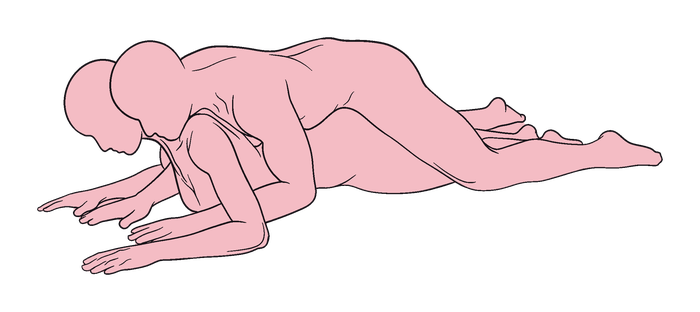
Full-contact prone rear entry: the receiving partner lies flat with legs together, the other partner stretched out on top.
Arched Prone Bone
Prone bone with the top partner's chest lifted just enough to breathe and move freely, without the arm cost of a full plank. It's the long-haul flat position — pick it when you want prone contact for more than a few minutes. Full entry in the glossary.
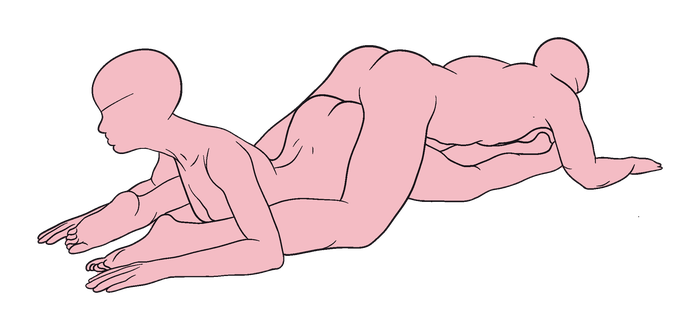
Prone rear entry with the top partner's chest arched up in a low plank, legs outside the receiving partner's.
Seated Doggy
The lowest-effort option in the doggy family for the partner behind, who sits rather than kneels while the receiving partner supplies most of the motion. Expect a slow, rocking pace instead of power — it earns its place here as the recovery position. Full entry in the glossary.
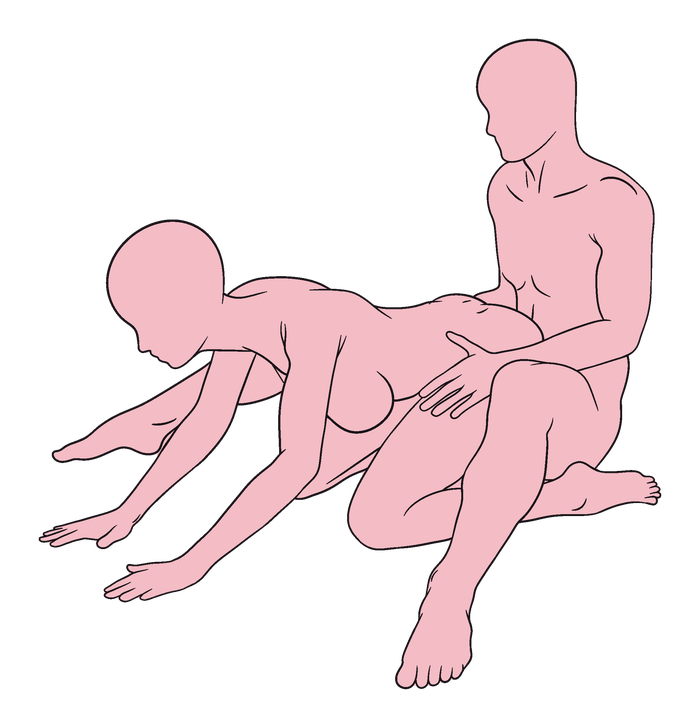
Doggy style with the entering partner seated flat on the floor, legs extended on either side of the receiving partner.
Kneeling Sideways Doggy Style
The angle change here comes from rotation rather than chest height — hips turned toward the kneeling partner while the shoulders stay grounded. Ease into the twist over a few breaths and keep the neck relaxed and unloaded; if the shoulders start lifting or the neck cranks, unwind and reset before continuing. Full entry in the glossary.
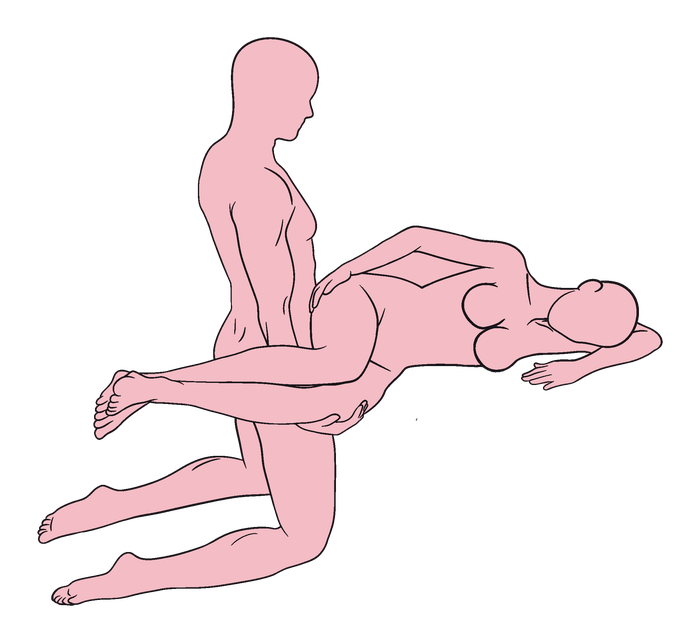
The receiving partner lies twisted sideways, hips raised to the kneeling partner's lap, legs extended together across their front.
Push Up Prone Bone
The demanding end of the prone family: the top partner holds the top of an actual push-up for the duration. Be honest about how long a plank you can hold before choosing it, and treat dropping to the forearms as part of the plan rather than a failure. Full entry in the glossary.
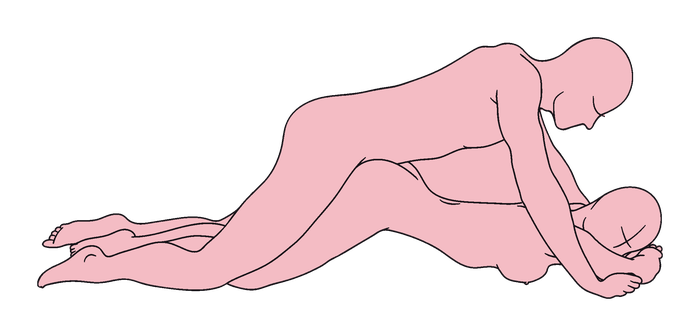
Prone rear entry with the top partner arched high on straight arms in a push-up hold.
Snared Groundhog
The hips-up, chest-down groundhog shape with one addition — the receiving partner's feet brace against the partner behind, locking the pair together and steadying the rhythm. The deep knee bend to get the feet there is the real gate, so warm up first and never force them into place. Full entry in the glossary.
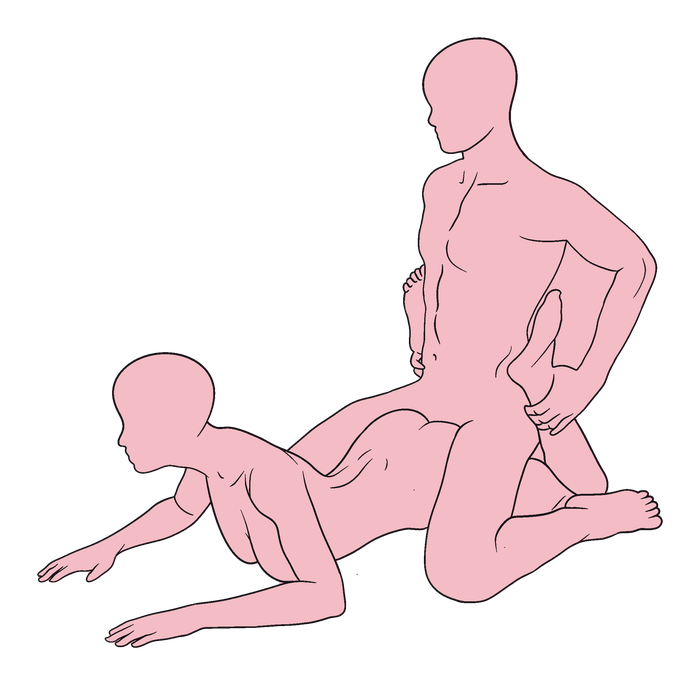
A Groundhog variant where the receiving partner's feet press against the kneeling partner's torso, hooking them in place.
Groundhog
This one earns its difficulty rating from the squat: the partner behind holds a deep, feet-flat crouch that the thighs will feel within a minute or two. Set up near something to grab for balance, and agree in advance that dropping to the knees is a mid-position adjustment, not an ending. Full entry in the glossary.
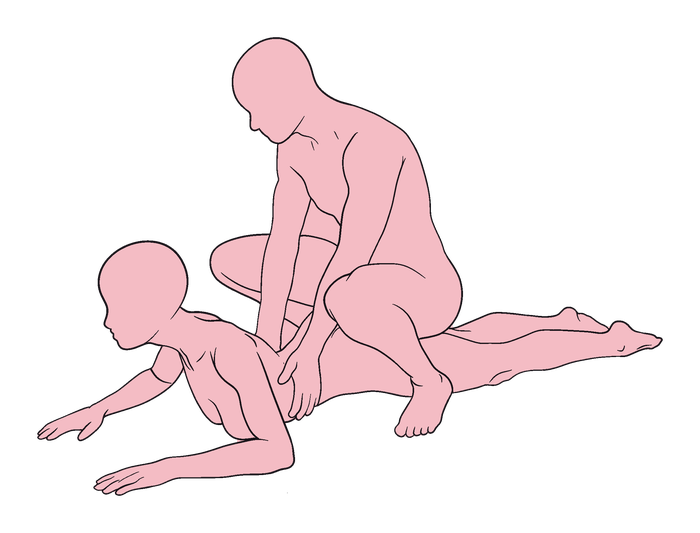
A prone position with the other partner in a deep squat over the receiving partner's thighs, gripping their hips.
Standing Groundhog
The receiving partner's head sits well below their hips here, so pressure in the face and load through the neck build quickly — keep rounds short and come up slowly. Between the head-down fold and the leg held at hip height, this is the most physically gated position on the list; treat it as a finisher, not an opener. Full entry in the glossary.
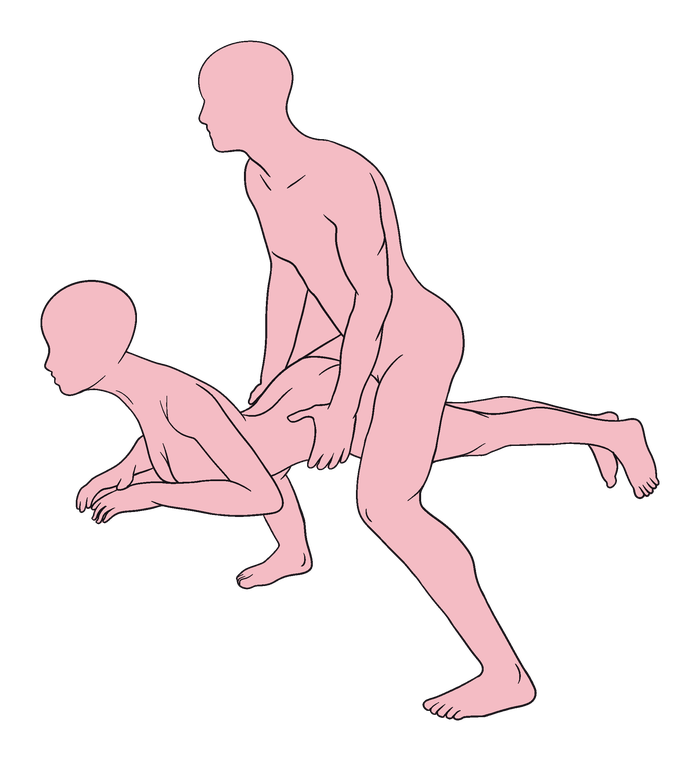
A low crouch with one leg extended straight back at hip height, the standing partner lunging astride from behind.
Before you try these
- Pillows are the cheapest adjustment — a firm pillow under the hips shifts a flat position toward a raised one, and one under the chest does the reverse. Change height with props before either partner strains to hold a shape.
- Chest height is the master dial — before abandoning a position that feels off, have the receiving partner move their chest up or down a few inches. Most angle and depth problems in this family solve exactly that way.
- Agree on a signal before you start — rear entry removes eye contact and often muffles the voice, so set a tap or a word for slower or shallower up front instead of negotiating mid-motion.
What makes these positions easier
Clove's guides to the props and toys that pair well with the positions on this page.
Get the free Clove starter guide
The easiest positions to try first, lube basics and our tested picks, sent to your inbox. Then one practical guide a week. No spam, unsubscribe anytime.