

Standing positions trade the bed's support for the ability to happen anywhere — a hallway, a shower, the two minutes before you make it to the bedroom. The trade-off is honest: your legs and core now do the work a mattress normally does, and every pose on this list asks for a specific kind of balance. That's why this guide runs easiest first. Start where the list starts, and move down as your legs and your confidence allow.
The fifteen positions here sort into three rough families. Leaning embraces like Bodyguard keep every foot on the floor and are the gentlest way in. Standing rear entry asks the receiving partner to fold forward — anywhere from a braced lean to a full hands-to-the-floor fold. The dancer family lifts one leg off the ground, which is where balance becomes the whole game. Two things run through all of them: a wall or doorframe converts a balance problem into a much smaller strength problem, and a large height difference is easier to fix with furniture or bent knees than with effort.
The positions
Bodyguard
The easiest place to start standing: nobody lifts a leg, all four feet stay planted, and the close front-to-back press does most of the stabilizing. Put a wall in front of you if either partner would rather not think about balance at all. Full entry in the glossary.
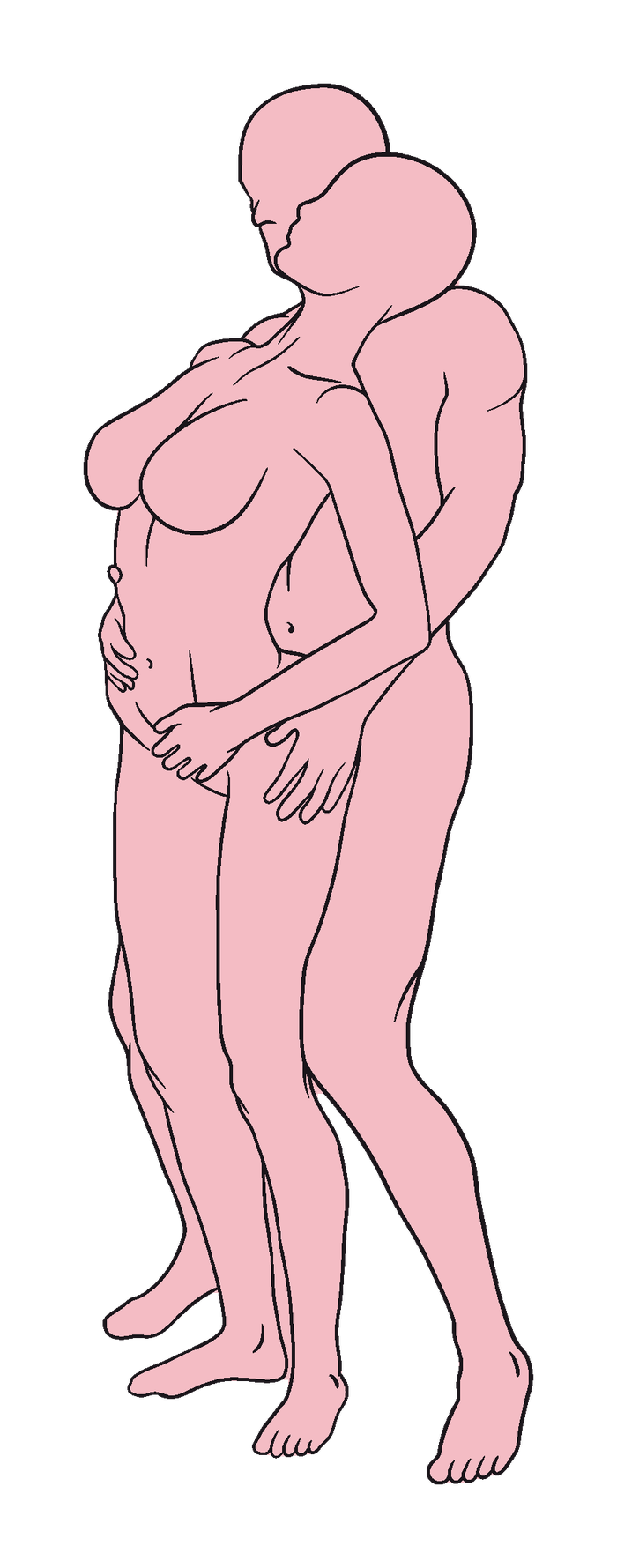
Standing chest-to-back embrace — the other partner wraps around from behind, a wall adds stability.
Supported Dancer
This is the on-ramp to the dancer family — only one foot leaves the floor, and the standing partner's hand under the raised thigh carries the rest. Learn it near a wall before trying the freestanding versions further down the list. Full entry in the glossary.
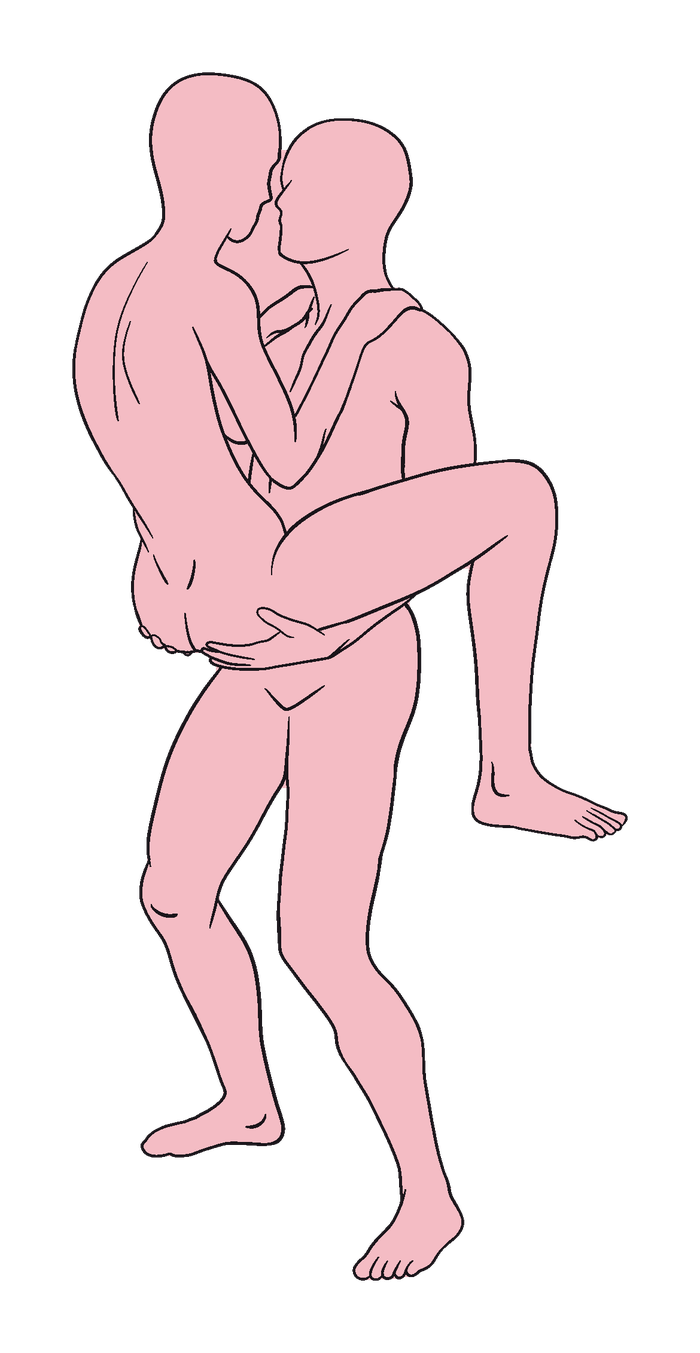
Close face-to-face embrace with one knee hooked around the partner's hip and a hand cupped underneath for support.
Supported Standing Doggy
The rear-entry pose to learn first, because the wall or counter does the holding that the receiving partner's hamstrings and lower back would otherwise do. Choose a brace at roughly hip height so the bend stays moderate. Full entry in the glossary.
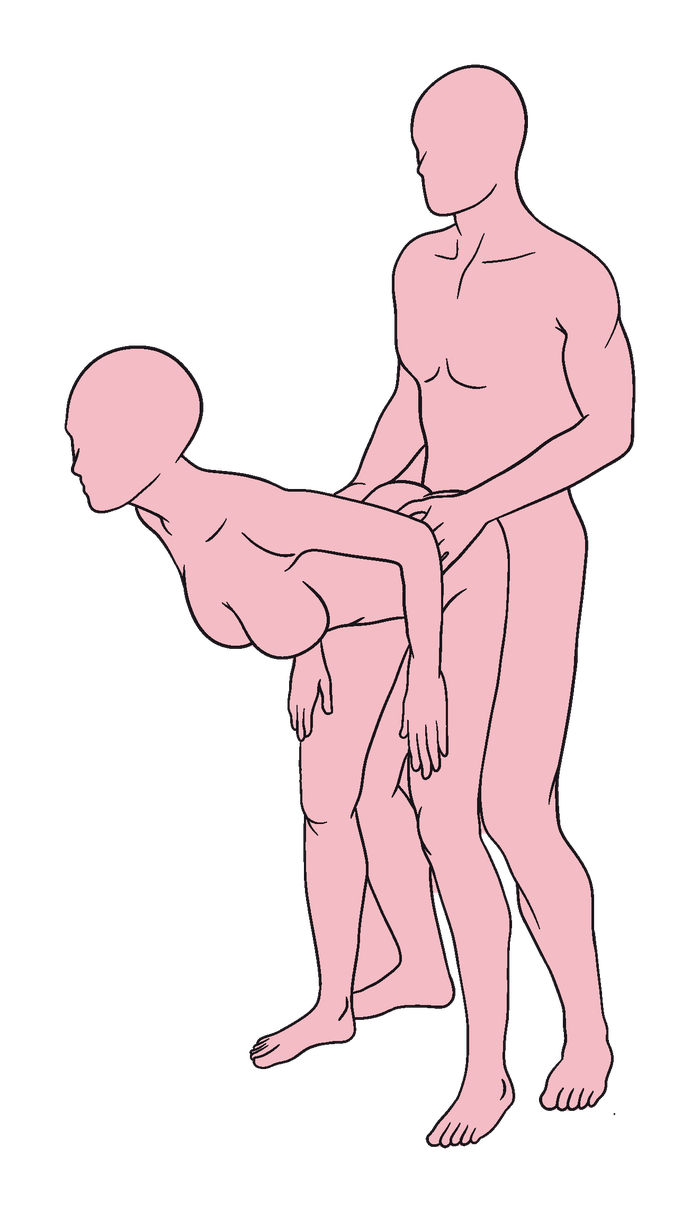
Standing rear-entry with the front partner braced rather than fully folded forward.
Folded Standing Doggy
A full forward fold with nothing to hold onto, so the receiving partner's hamstrings set the depth — do not force the last few inches. The head spends the whole position below the hips, so straighten up slowly to avoid a head rush. Full entry in the glossary.
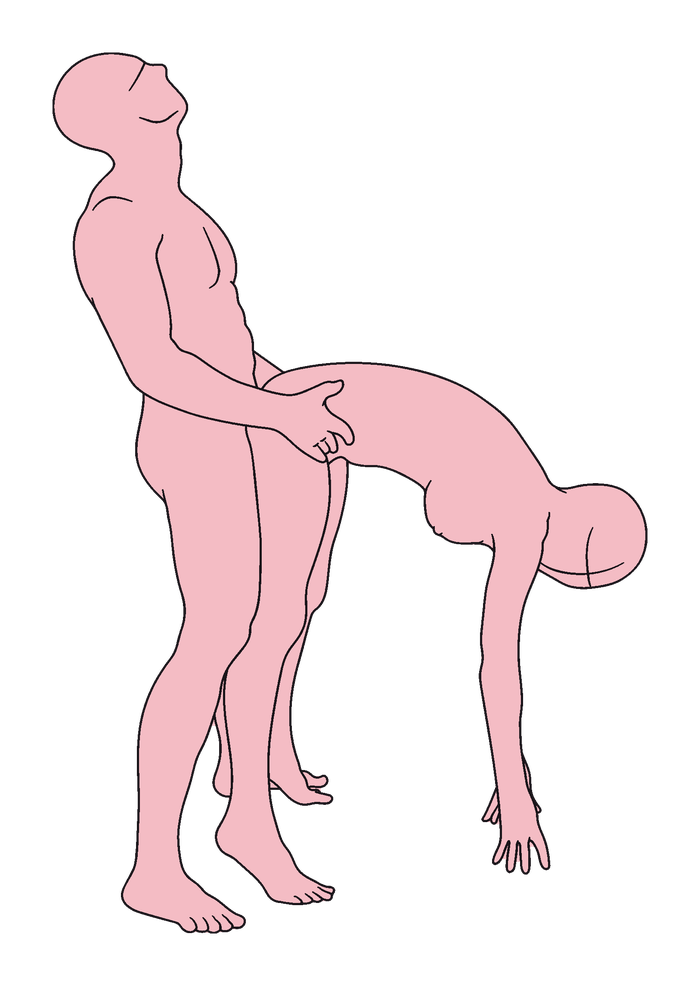
The receiving partner folds flat forward, hands toward the floor, while the standing partner enters from behind.
Leg Up Dancer
The first pose here where balance is genuinely shared rather than one partner's job, so get both sets of feet settled before anyone moves. Keep motions small, and give the standing partner a wall at their back if the room allows it. Full entry in the glossary.
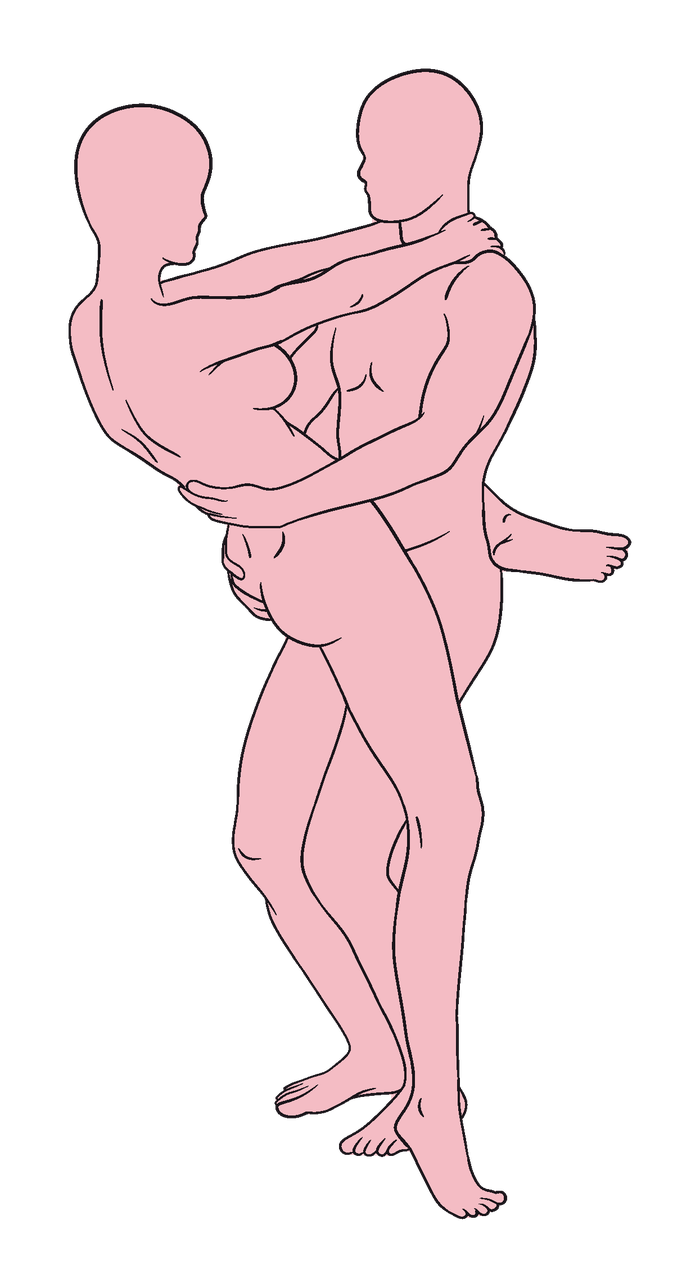
Upright and face to face, one leg wrapped around the partner's hip, each balancing on a single standing leg.
Raised Bodyguard
This one earns its spot by solving the height-difference problem that trips up most standing rear entry — the platform does the aligning. Test the ottoman with full weight before you commit, and expect the receiving partner's thighs to feel the half-squat before long. Full entry in the glossary.
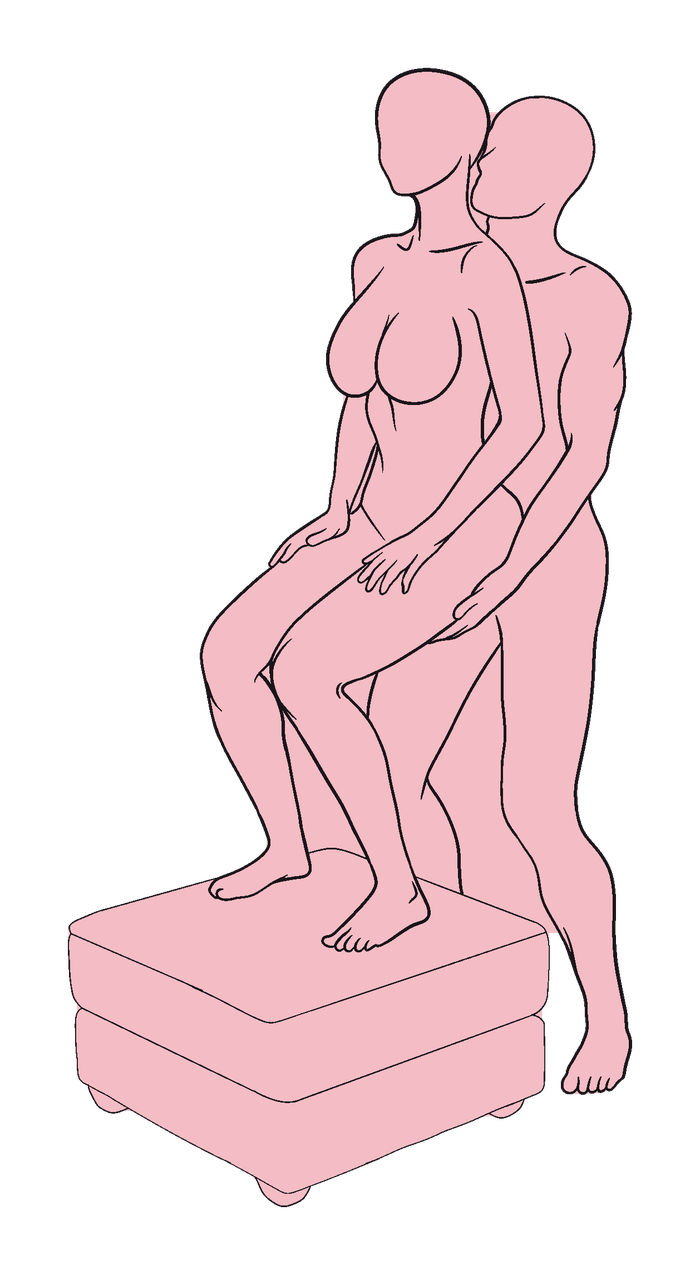
Bodyguard with a height assist — the receiving partner half-squats on a padded ottoman to align hips for standing rear entry.
Standing
The baseline pose the rest of this list is built from, and it costs more leg and core strength than it appears to. Lean into a wall or doorframe early rather than waiting until your legs are already complaining. Full entry in the glossary.
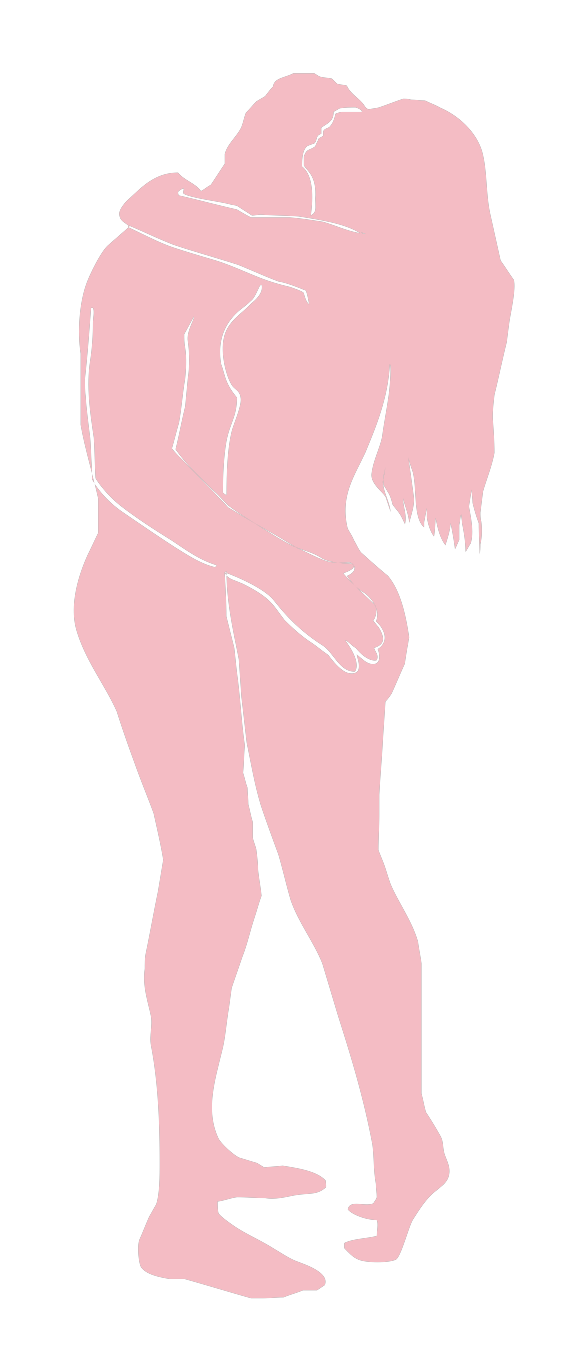
Both partners standing, facing the same direction or facing each other — a wall or doorframe takes the strain off.
Standing Doggy
The unsupported sibling of the braced version above: no wall, no counter, just the receiving partner's hamstrings and lower back holding a horizontal fold. Keep the bend shallow at first and treat endurance, not depth, as the goal. Full entry in the glossary.
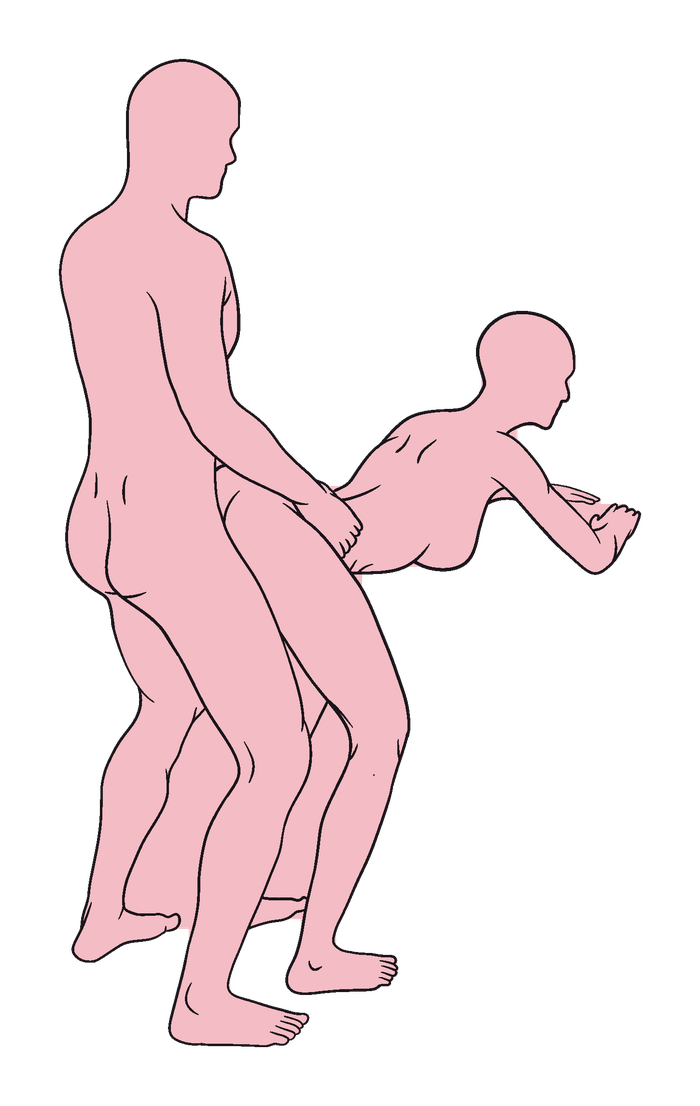
A freestanding rear-entry bend: the receiving partner folds to horizontal with nothing but their own back holding the position.
Toe Touch Standing Doggy
The full fold becomes more secure here because the receiving partner has two grips — their own ankle and the other partner's leg. Warm up the hamstrings beforehand, and come back upright in stages, since a long head-down hold can leave you lightheaded. Full entry in the glossary.
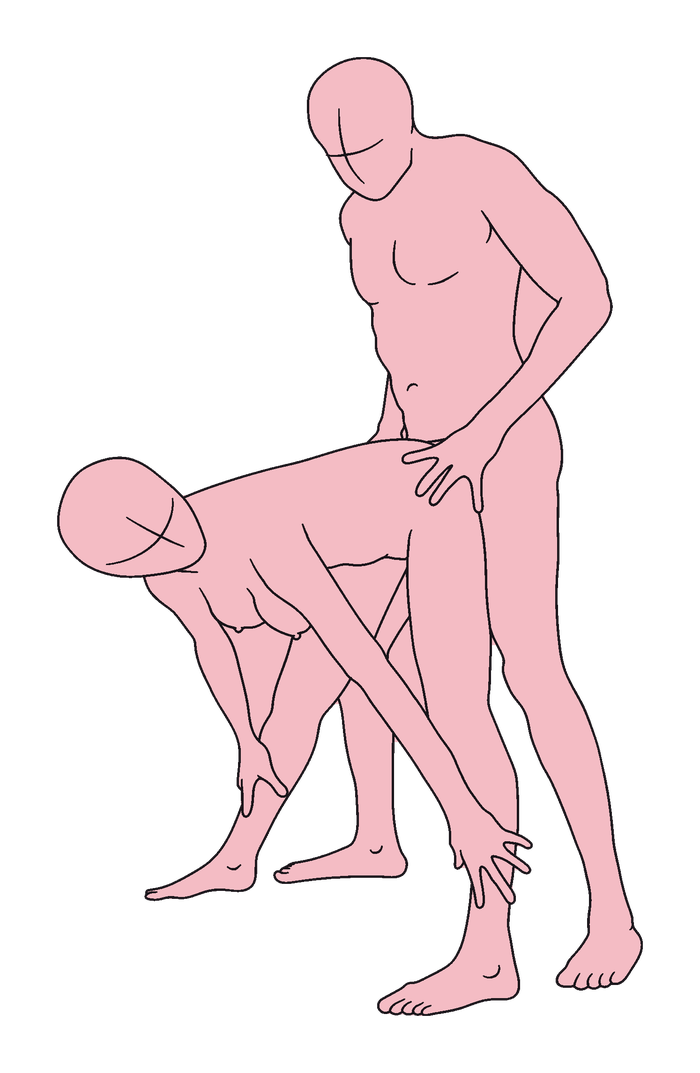
Standing rear entry with the receiving partner folded flat, gripping their own ankle and the partner's leg.
Wrapped Dancer
The freestanding middle of the dancer family: one leg around the standing partner's waist and no wall or furniture in reserve. The standing partner's two-handed grip is what holds the whole thing together, so set it firmly before either of you starts moving. Full entry in the glossary.
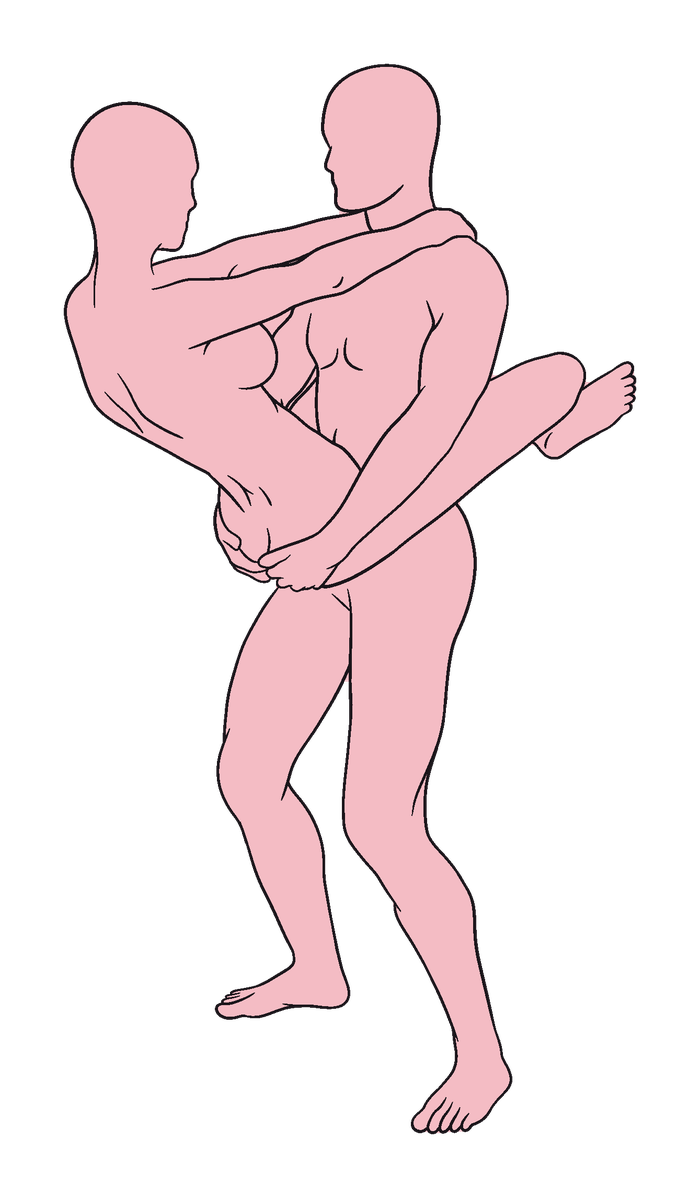
Face-to-face standing hold with one leg wrapped around the waist, both hands supporting the raised thigh and buttock.
Arched Dancer
This stacks a backbend on top of the single-leg balance, with the standing partner's propped knee and lower-back hand doing the catching. Build the arch gradually and let the head follow the spine back slowly — dropping it suddenly is hard on the neck. Full entry in the glossary.
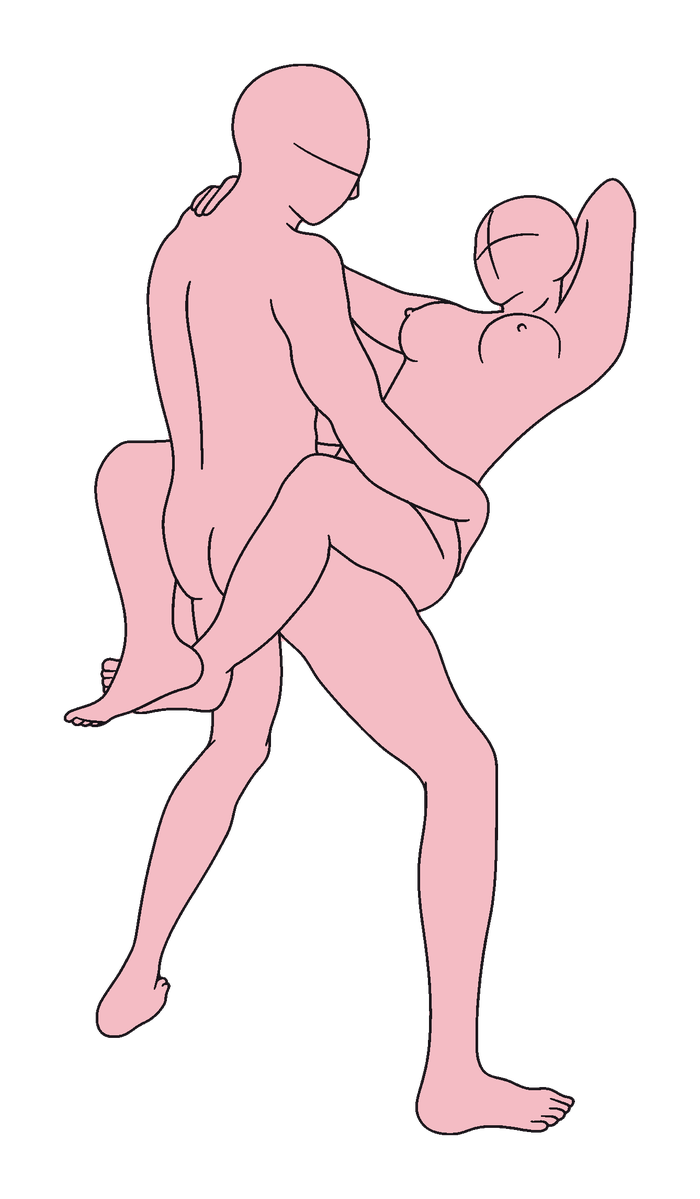
A one-legged standing arch, leg hooked over the partner's hip, supported by a hand at the lower back.
Dancer
The namesake pose, and the point where this family stops being an embrace and becomes a balance act with a deep back arch. The standing partner's hand cradling the head is not decoration — a dropped-back head needs that support so the neck is never holding the arch alone. Full entry in the glossary.
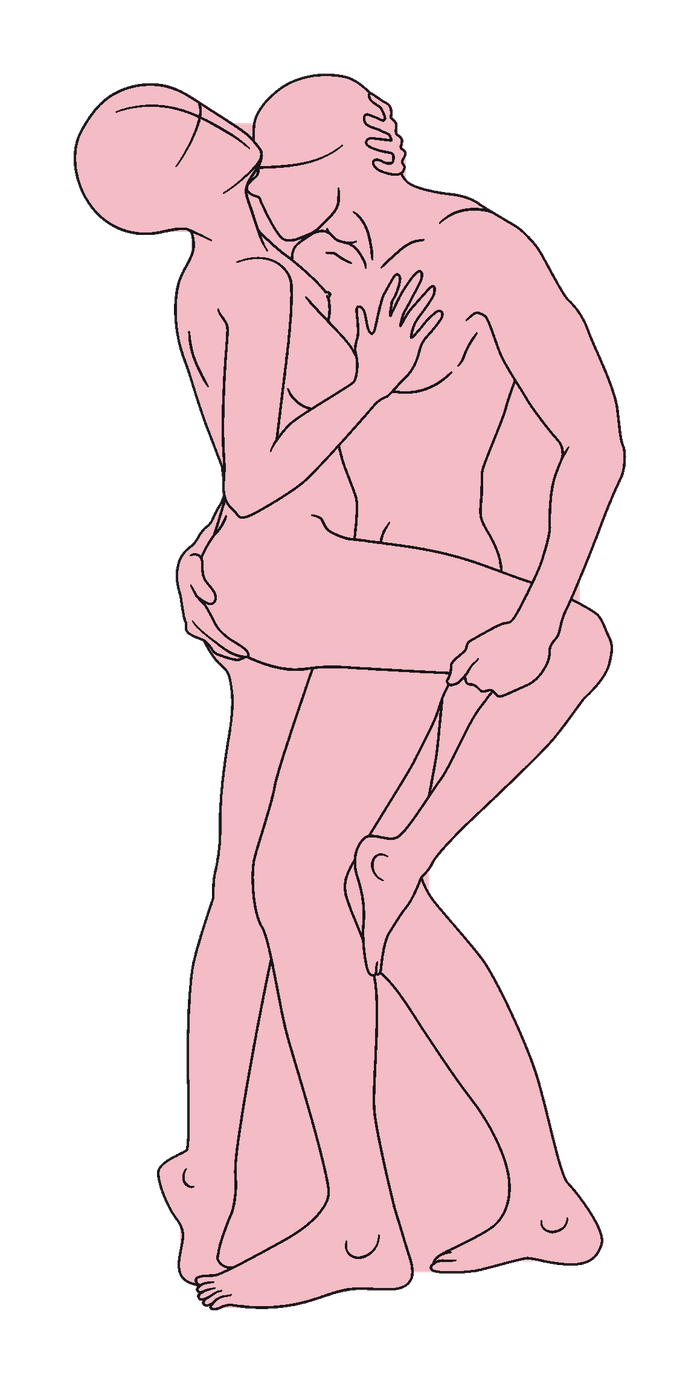
Standing face to face, the receiving partner arches back with one bent knee lifted alongside the standing partner's hip.
Raised Dancer
No wall and no furniture: this runs entirely on the standing partner's grip and the receiving partner's hip flexibility as the leg swings high and out to the side. Raise the leg in increments across several sessions rather than reaching for full height on the first try. Full entry in the glossary.
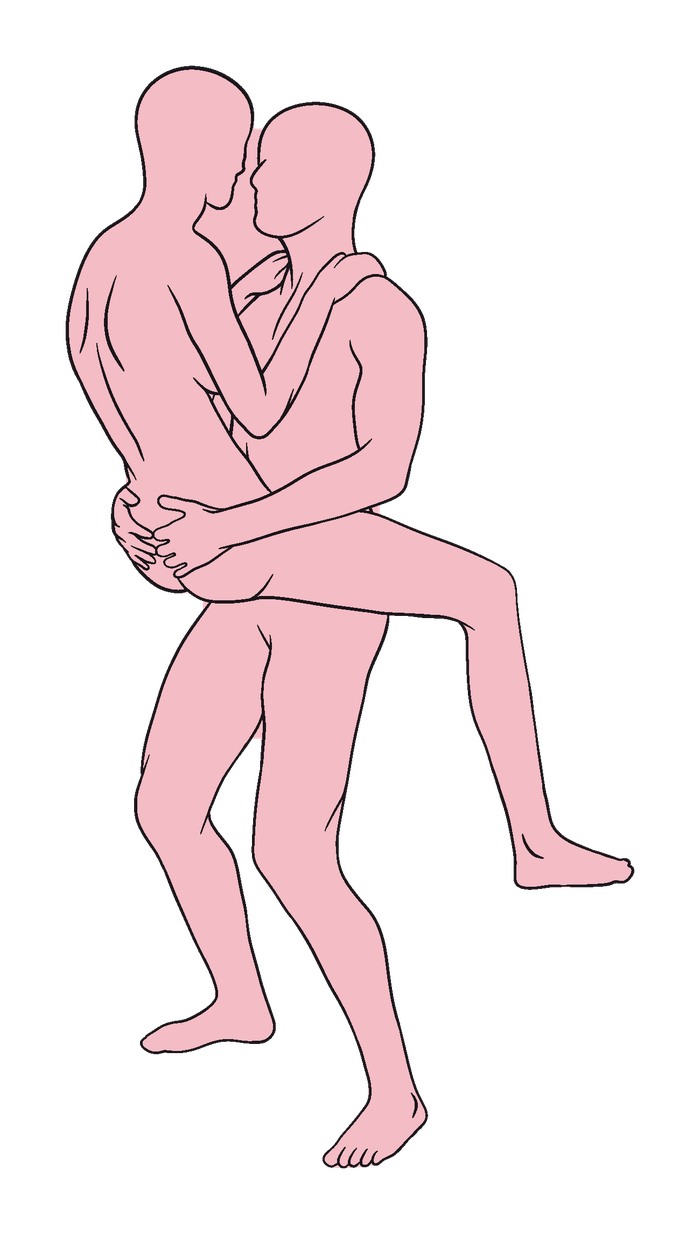
Chest-to-chest standing embrace with one leg lifted high and swung out to the side, no furniture required.
Split Dancer
The flexibility ceiling of this roundup — one leg extended toward vertical while everything else stays standing. It only makes sense if the receiving partner can already approach a standing split on their own; the other partner's job is holding the leg steady, never pushing it higher. Full entry in the glossary.
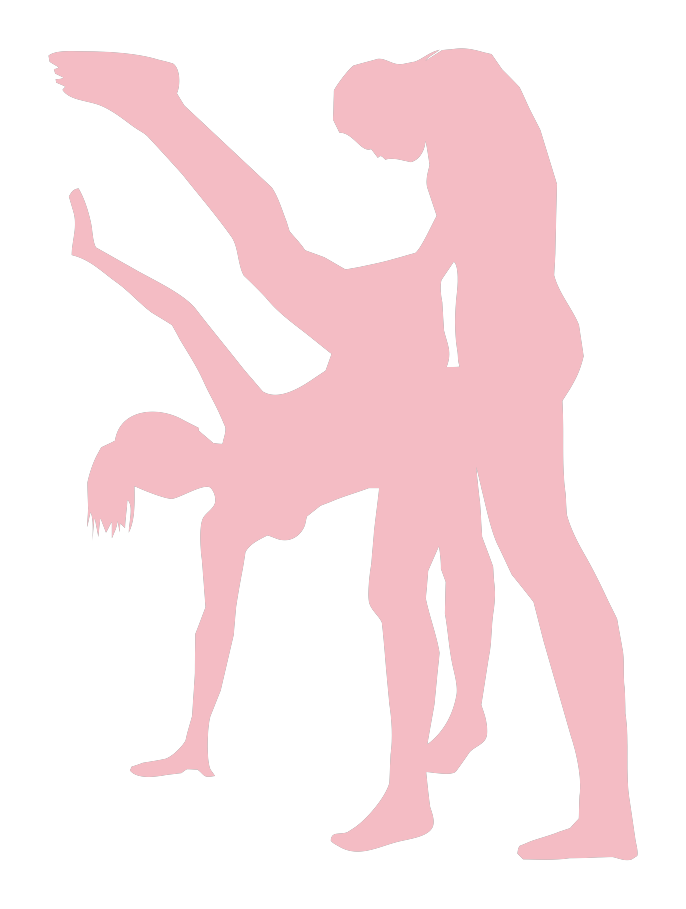
A high leg extension held by the other partner — demands hip flexibility and balance.
Standing Twisted Doggy
The hardest rear-entry pose here because it stacks three separate balance problems — a forward fold, a leg held at hip height, and a spinal twist — on one standing leg. Add the rotation last and gently, and remember the head has been below the heart when you finally straighten up. Full entry in the glossary.
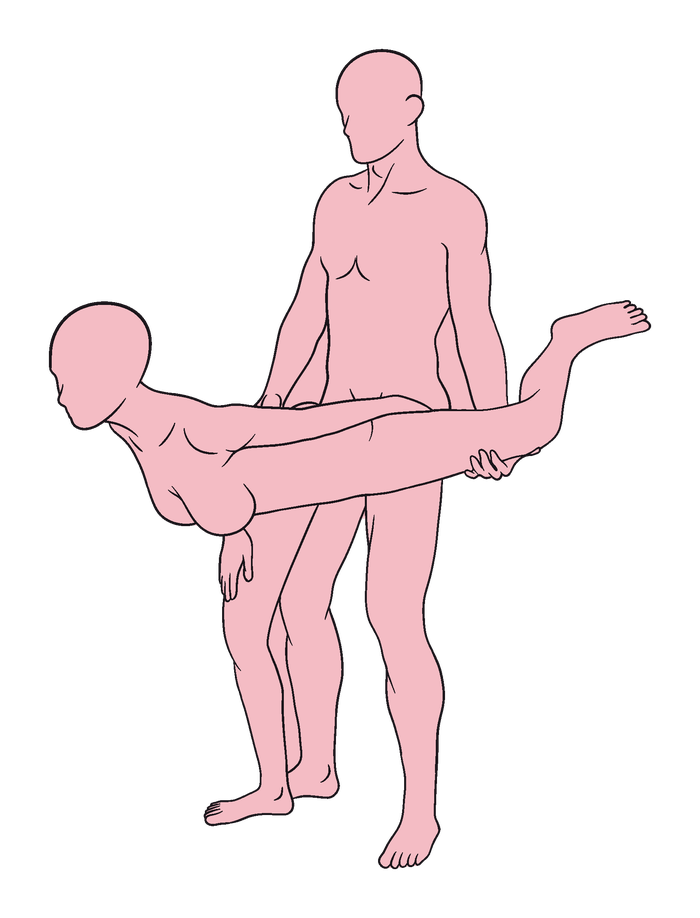
A one-legged forward fold with the raised leg held past the standing partner's side, twisting the hips during rear entry.
Before you try these
- Use the wall early — leaning on something is not cheating, it is the difference between a position you can hold for thirty seconds and one you can actually enjoy. A wall, doorframe, or counter takes most of the balance work off both partners at once.
- Check your footing before anything else — bare feet on a dry floor grip far better than socks on hardwood or wet shower tile. If the surface is slick, either fix it with a bath mat or pick a pose from earlier in the list.
- Come out of folds and arches in stages — any position where the head drops below the hips or tips back behind the spine can leave the receiving partner dizzy on the way up. Unwind slowly, pause halfway, and finish standing before you let go of each other.
What makes these positions easier
Clove's guides to the props and toys that pair well with the positions on this page.
Get the free Clove starter guide
The easiest positions to try first, lube basics and our tested picks, sent to your inbox. Then one practical guide a week. No spam, unsubscribe anytime.