

Every position in this guide puts the receiving partner's head below their hips. That one change accounts for most of what makes these positions interesting — the blood rush, the unusual angles, the sense of doing something genuinely acrobatic — and most of what makes them demanding. The fourteen entries sort into four rough families: the waterfalls, which fold or arch the torso downward while the other partner supports the hips; the piledrivers, which rest the receiving partner's weight on the shoulders and upper back; the wheelbarrow and handstand group, which put the receiving partner on their hands; and a few bridge and dip holds that borrow from all three.
None of this requires a spotter, but all of it requires care. The list runs from difficulty four to five — there are no easy entries — starting with the waterfall family, which delivers the head-down effect with the most support, and ending with the holds that ask for real strength and conditioning. Treat the cautions in each entry as part of the position rather than fine print: inversions concentrate load on the neck and raise pressure in the head, and both problems are managed the same way — move in gradually, keep holds short, and come out the moment anything feels wrong.
The positions
Waterfall
The gateway to this list: a steep forward fold rather than a full inversion, so you get the head-down effect with both palms on the floor to steady it. Blood pools quickly in this fold, so pause before standing back up. Full entry in the glossary.
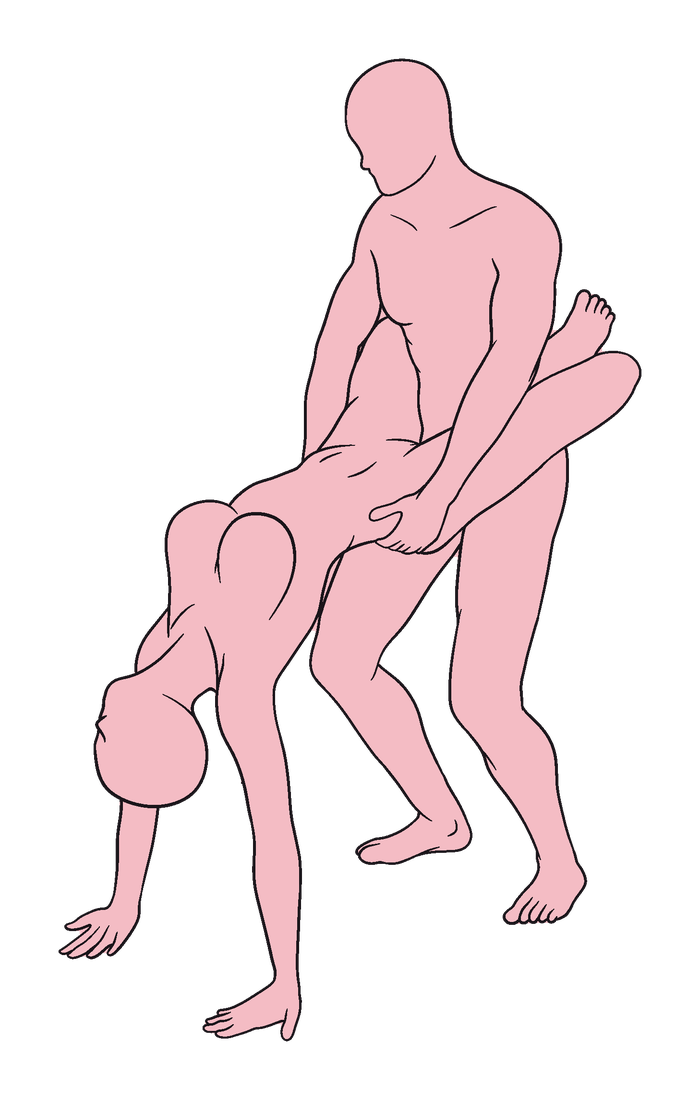
Rear-entry standing fold with the torso dropped toward the floor and one leg hooked up over the partner's arm.
Kneeling Waterfall
The same head-down payoff as the original, but the demand shifts from balance to back flexibility — this one lives or dies on how comfortable the receiving partner is in a deep backbend. Skip it on a cold spine, and come up in stages rather than one motion. Full entry in the glossary.
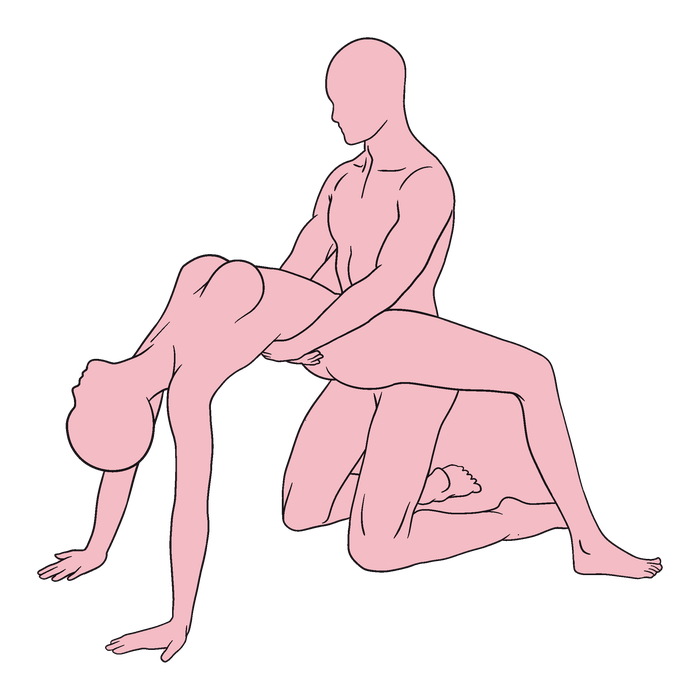
The receiving partner backbends face-up across the kneeling partner's lap, head toward the floor, feet planted wide to either side.
Standing Waterfall
The trickiest waterfall variation to stabilize, because the lifted side leg removes one of the receiving partner's anchor points. Both partners are doing balance work here, so set up near a wall the first few times. Full entry in the glossary.
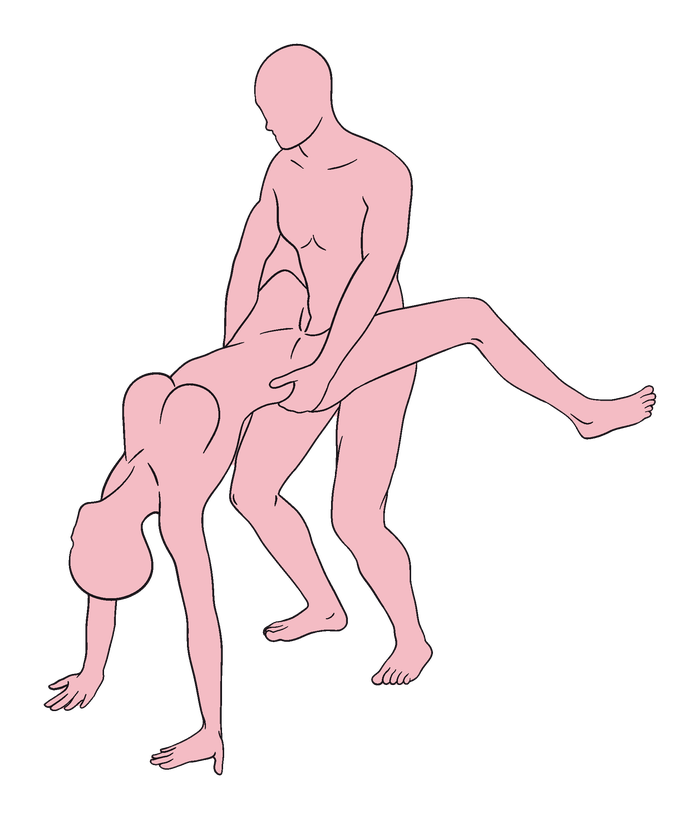
A head-down forward plunge with one leg lifted to the side, hips raised to the standing partner entering from behind.
Sitting Waterfall
The most supported entry in the waterfall family — the seated partner's lap carries the hips, leaving the receiving partner's spine and arms less to hold. The head still ends up below the hips, so sit up slowly and expect a brief head rush. Full entry in the glossary.
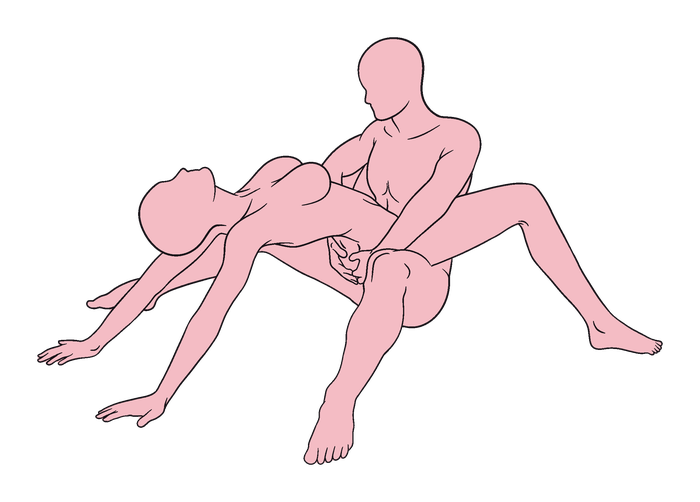
The receiving partner arches face-up off a seated partner's lap, head and arms reaching the floor behind.
Downward Doggy
Another forgiving on-ramp: a familiar rear-entry setup tipped into a head-down fold, with no balancing act at all. Tight hamstrings are the limiter, and the usual rule still applies — come upright gradually. Full entry in the glossary.
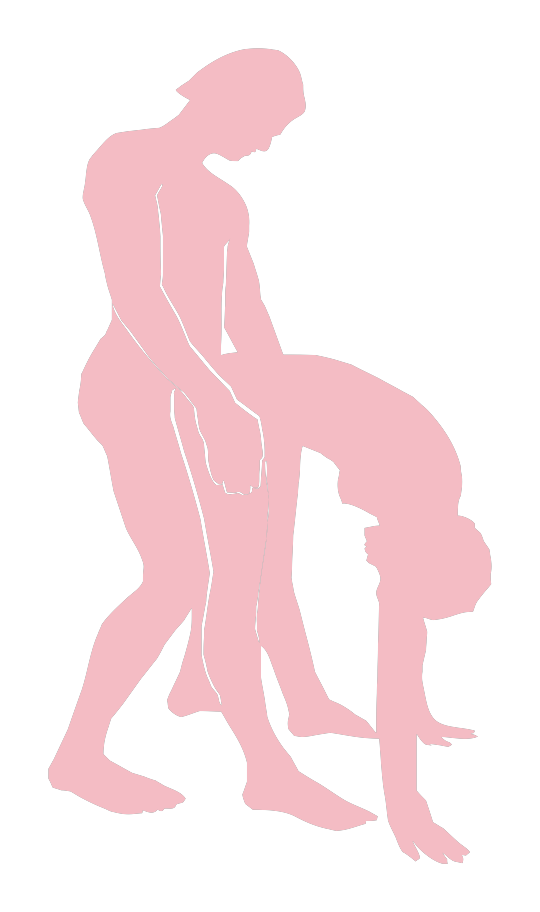
A standing partner entering a full forward fold — flexibility-dependent, named for the yoga pose it resembles.
Lap Bridge
A full bridge with a lap under the hips, which makes it more sustainable than a freestanding backbend but still a real load on the shoulders and lower back. Treat it as a position you visit, not one you stay in. Full entry in the glossary.
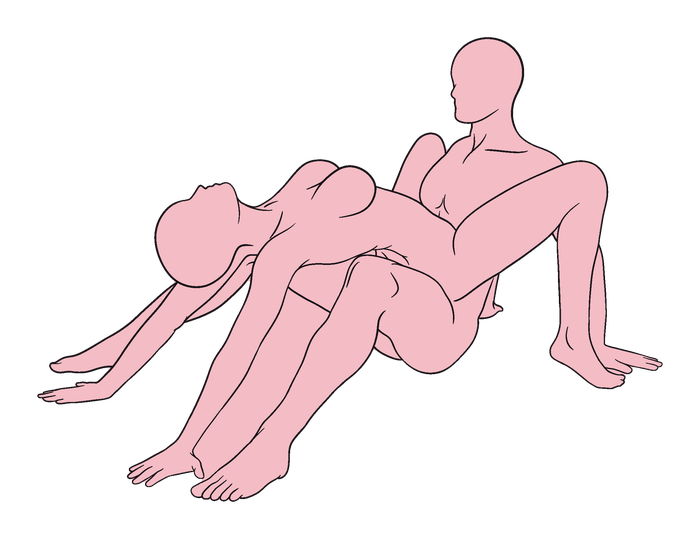
A full backbend over a seated partner's lap, hands and feet on the floor, head hanging back.
Piledriver
The namesake of the genre and the reason this guide keeps talking about necks: the receiving partner's weight rests on the upper back and shoulders, so the cervical spine is one bad shift away from taking load it should not. Brace against a wall or furniture, keep it short, and skip it entirely with any neck or blood-pressure history. Full entry in the glossary.
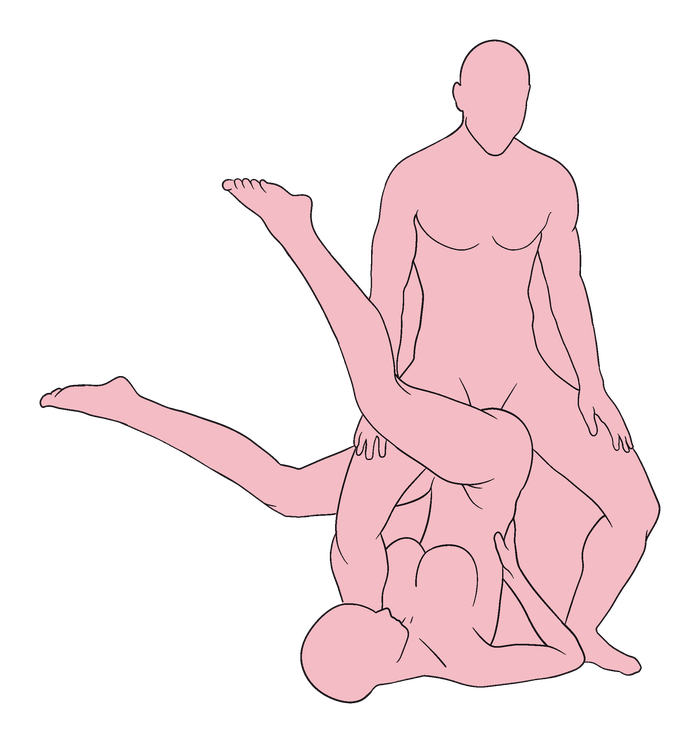
Hips elevated above head and shoulders, weight on the upper back — the definitive inversion.
Squatting Pile Driver
This one splits the difficulty cleanly: the squatting partner's legs have to hold a deep squat while the receiving partner tolerates a sustained shoulder stand. Keep the weight spread across the shoulders — the moment it drifts onto the neck, come out. Full entry in the glossary.
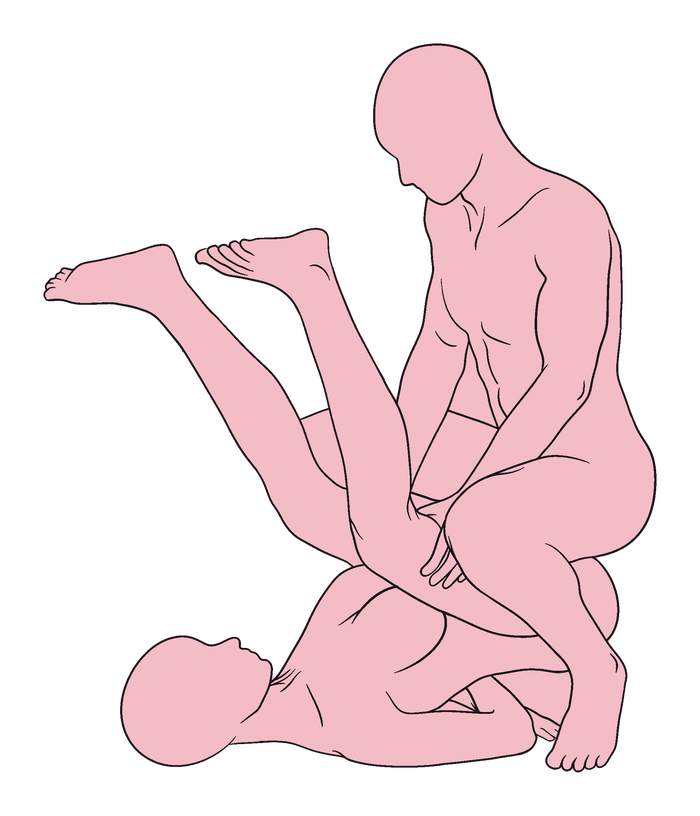
The receiving partner inverts onto their shoulders, hips vertical, while the other partner squats above facing them.
Standing Pile Driver
The vertical torso makes this the most neck-loaded hold in the piledriver family, and the standing partner's grip on the hips is what keeps that load honest. Any pinching at the base of the neck is the signal to unwind immediately, not to adjust in place. Full entry in the glossary.
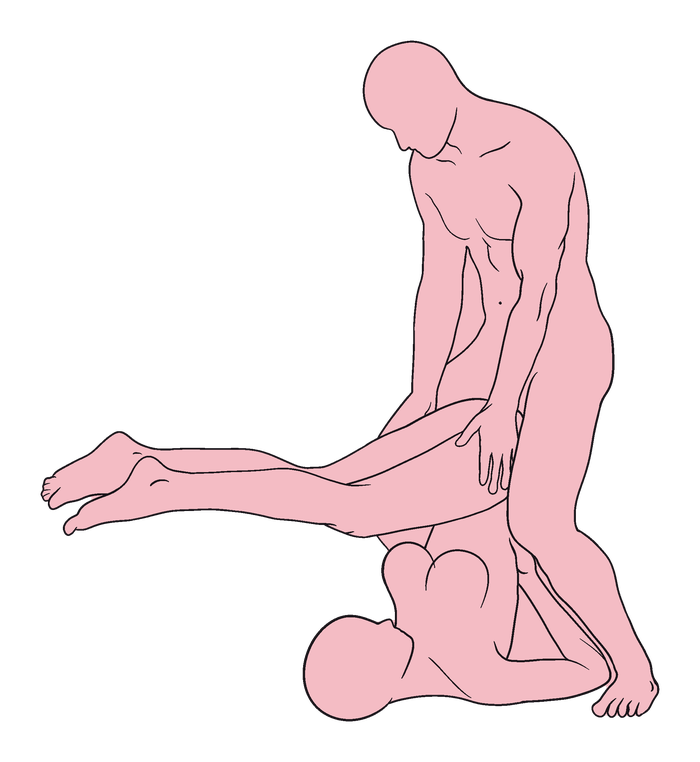
A shoulder-stand inversion: torso vertical, legs split past the standing partner's sides, entry from above. Mind the neck.
Wheelbarrow
Nothing else here stacks three demands at once — arm support, a wide split, and a near-inversion — which is why it rates a five despite looking simpler than the piledrivers. Keep holds brief and lower the legs before the arms give out, since a rushed exit is where necks get tweaked. Full entry in the glossary.
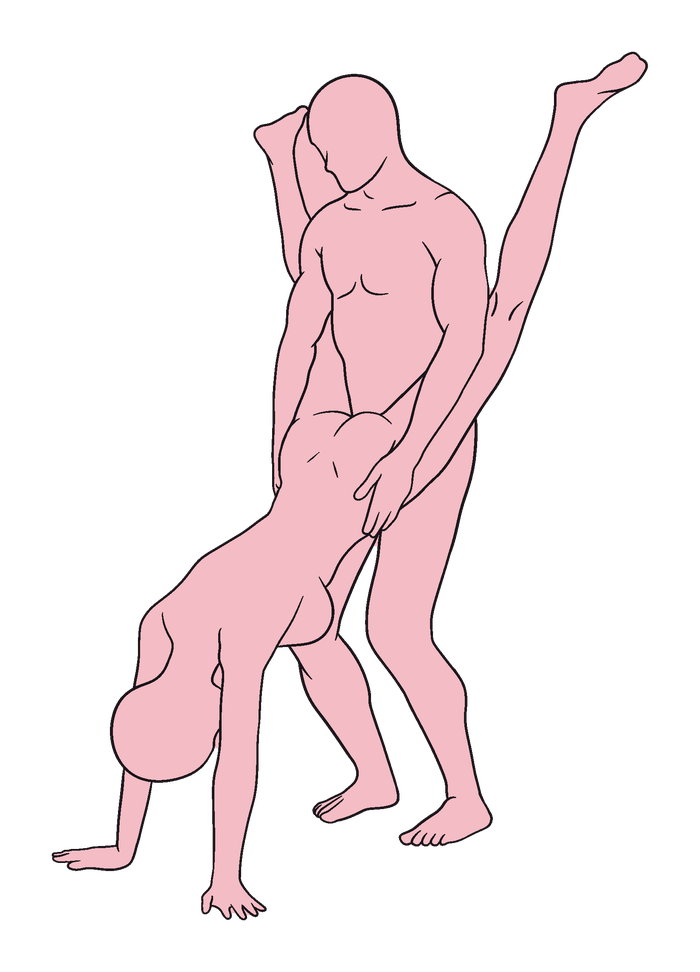
Near-handstand facing away from the partner, legs in a wide upward split, hips gripped and supported from behind.
Handstand
The purest strength test on the list: the receiving partner is essentially holding a supported handstand while everything else happens. If a wall handstand on its own is not comfortable yet, build that first — and come down one leg at a time, not in a drop. Full entry in the glossary.
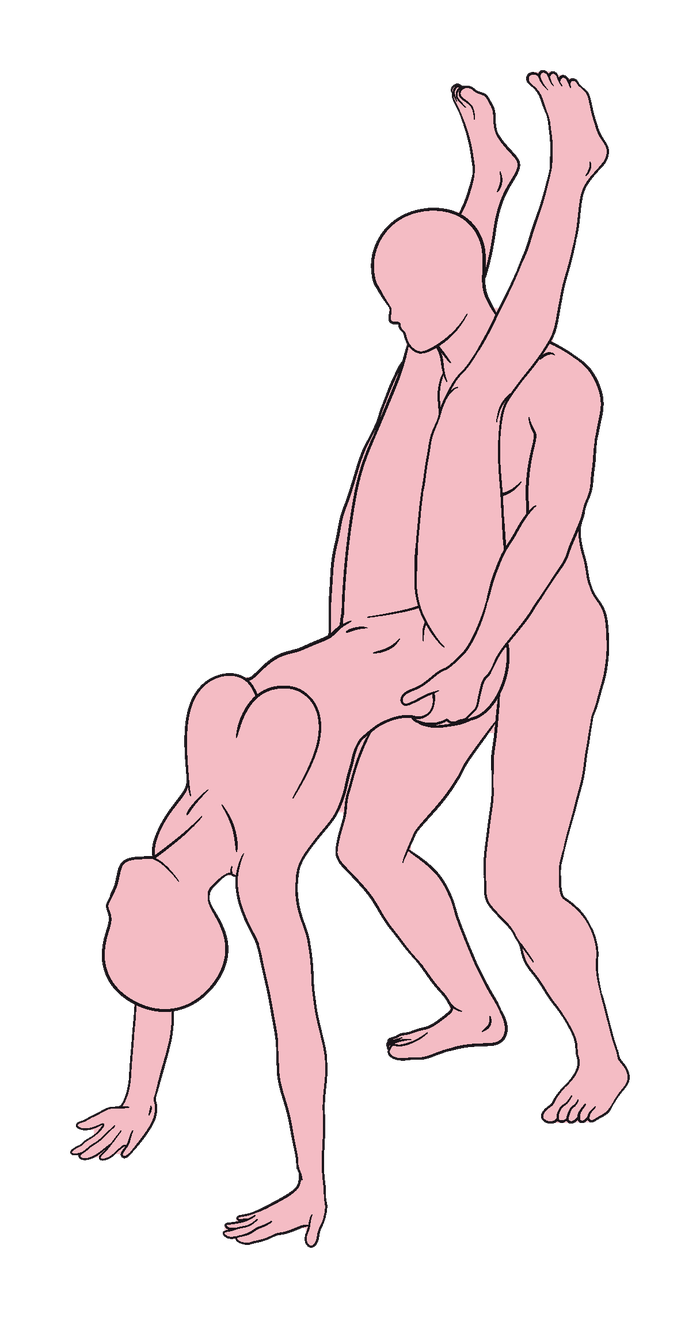
The receiving partner inverts onto their hands, legs straight up past the standing partner's head, hips held from behind.
Downward V
The tucked-leg lock makes this steadier than the open Handstand, but it also means the receiving partner cannot simply step out of it. Agree on a release signal beforehand so the standing partner can unwind the legs before the arms fatigue. Full entry in the glossary.
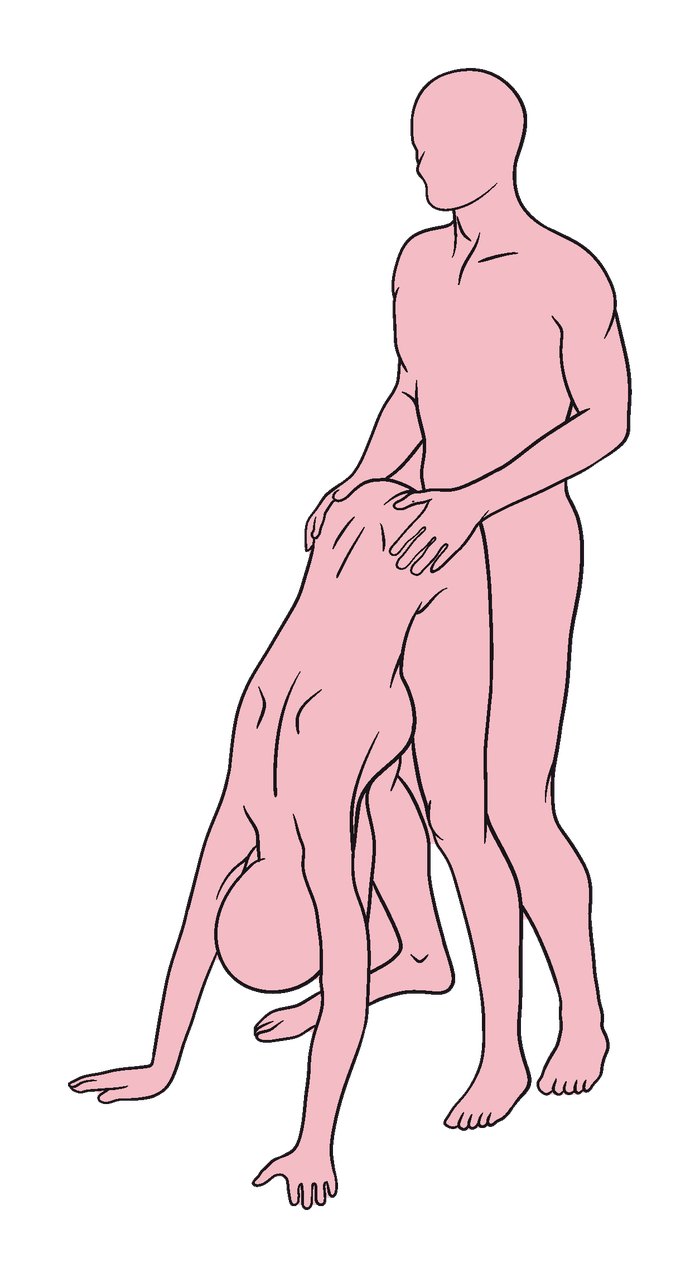
A supported handstand: the receiving partner inverted against the standing partner's front, legs tucked around their sides.
Italian Chandelier
One of the few inversions here with no standing partner to lean on — the receiving partner's crab bridge is the entire support structure, held over the other partner's body. That raises the cost of fatigue, so come down at the first shake in the arms rather than pushing through. Full entry in the glossary.
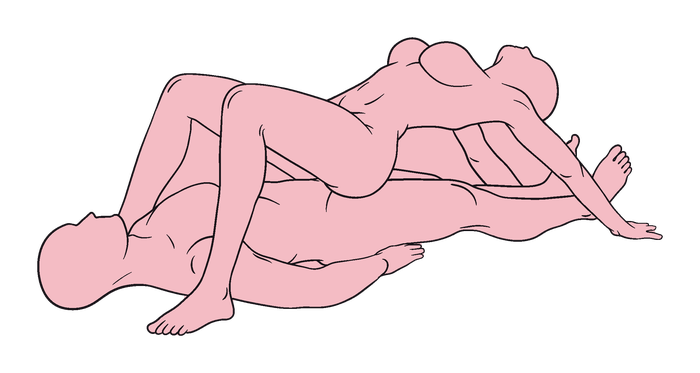
The receiving partner holds a face-up crab bridge over a partner lying flat, hips raised over their pelvis.
Dipped Dancer
The one position in this roundup where the support is a grip rather than the ground: the standing partner's hold on the arms carries the full weight of the dip. The head hangs completely back, so rise slowly and expect a wave of lightheadedness on the way up. Full entry in the glossary.
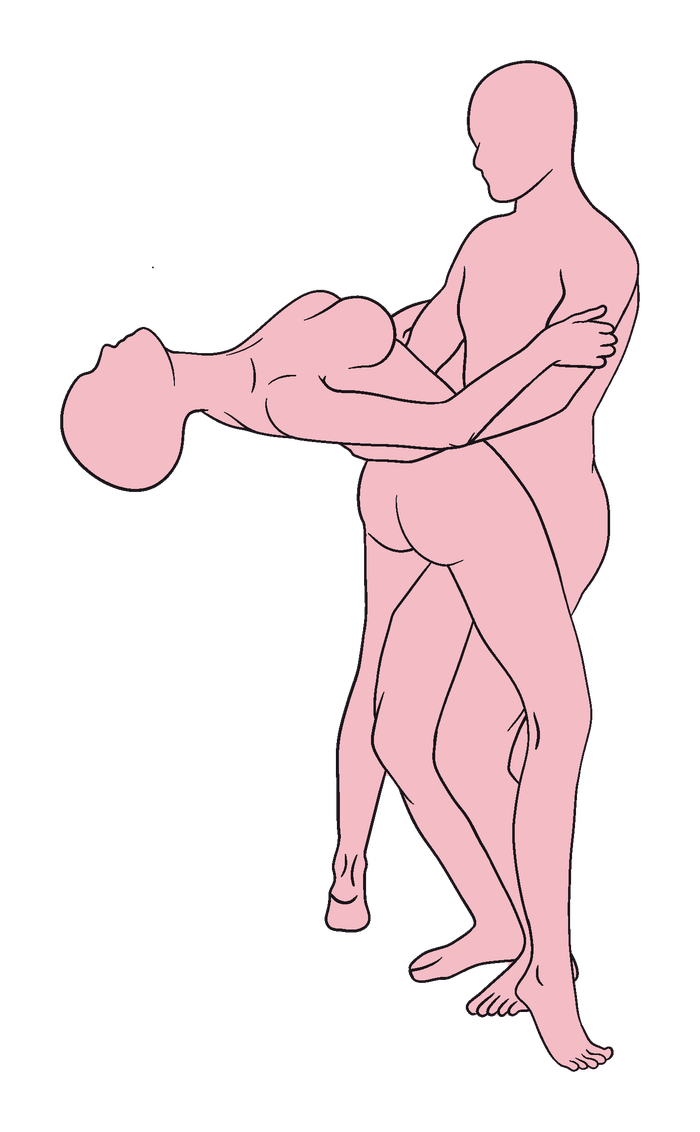
A standing face-to-face dip: the receiving partner in a supported deep backbend, head dropped toward the floor.
Before you try these
- Warm up like it's a workout — five minutes of neck rolls, hamstring stretches, and a couple of practice folds does more for these positions than enthusiasm will.
- Cap head-down time at about thirty seconds to start — pressure in the face, throbbing in the ears, or dimming vision means come up now, and always come up slowly.
- Keep weight off the neck itself — in any shoulder-stand position the load belongs across the upper back and shoulders, and anyone with neck problems, high blood pressure, or eye conditions like glaucoma should sit this list out.
What makes these positions easier
Clove's guides to the props and toys that pair well with the positions on this page.
Get the free Clove starter guide
The easiest positions to try first, lube basics and our tested picks, sent to your inbox. Then one practical guide a week. No spam, unsubscribe anytime.