

Standard positions assume a flat, clean surface to lie on and reasonable certainty that no one's watching. A beach removes both at once — there's no surface that isn't literally sand, and privacy depends entirely on the specific spot and time, not on anything you control the way you would at home. The four positions below are all standing, which sidesteps the sand problem completely, ordered from the most supported to the most freestanding.
1. Supported Standing Doggy
The receiving partner bends forward and braces their upper body against something solid — a rock, a dune ridge, a piece of driftwood, a lifeguard stand post — rather than folding all the way down unsupported. The brace point takes real weight off the legs and back, and it doubles as visual cover if the spot has any tree line or dune grass nearby. Full entry in the glossary.
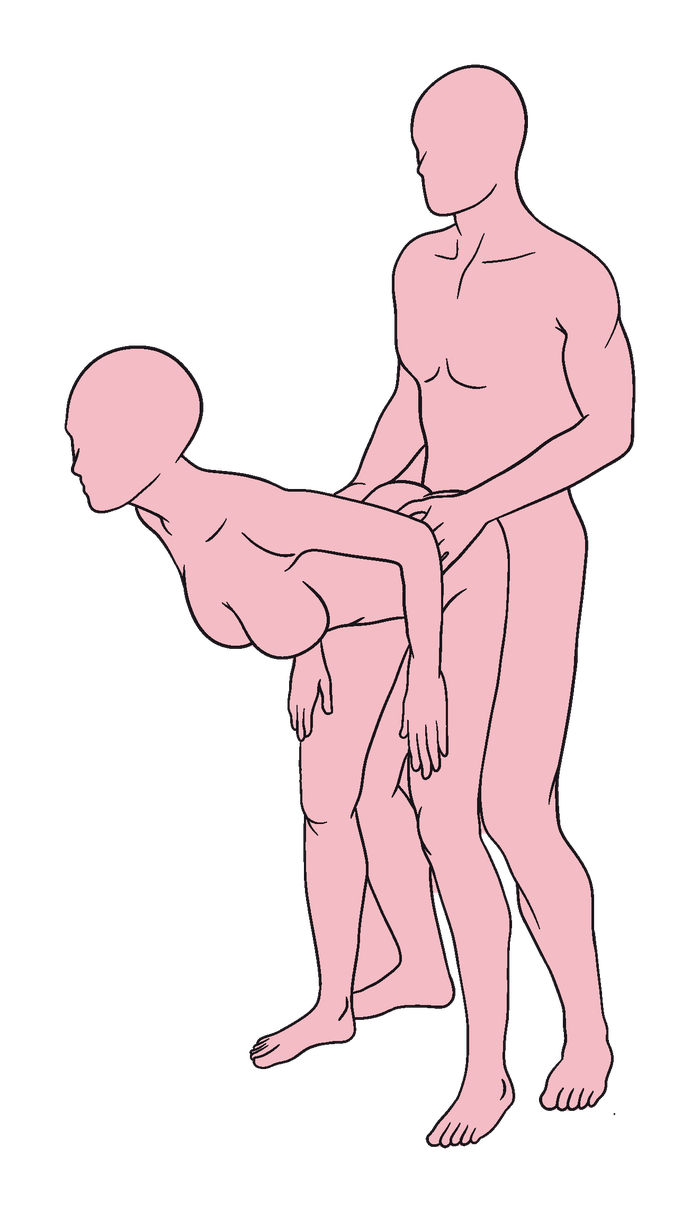
Braced against a rock, dune, or driftwood — the most sustainable and most easily screened option on this list.
2. Wrapped Dancer
Standing face to face in a close embrace, one leg lifted and wrapped around the other partner's waist while both hands support the raised thigh. The full-body embrace keeps the silhouette compact and close together, which matters more here than at home if there's any chance of being seen from a distance. Full entry in the glossary.
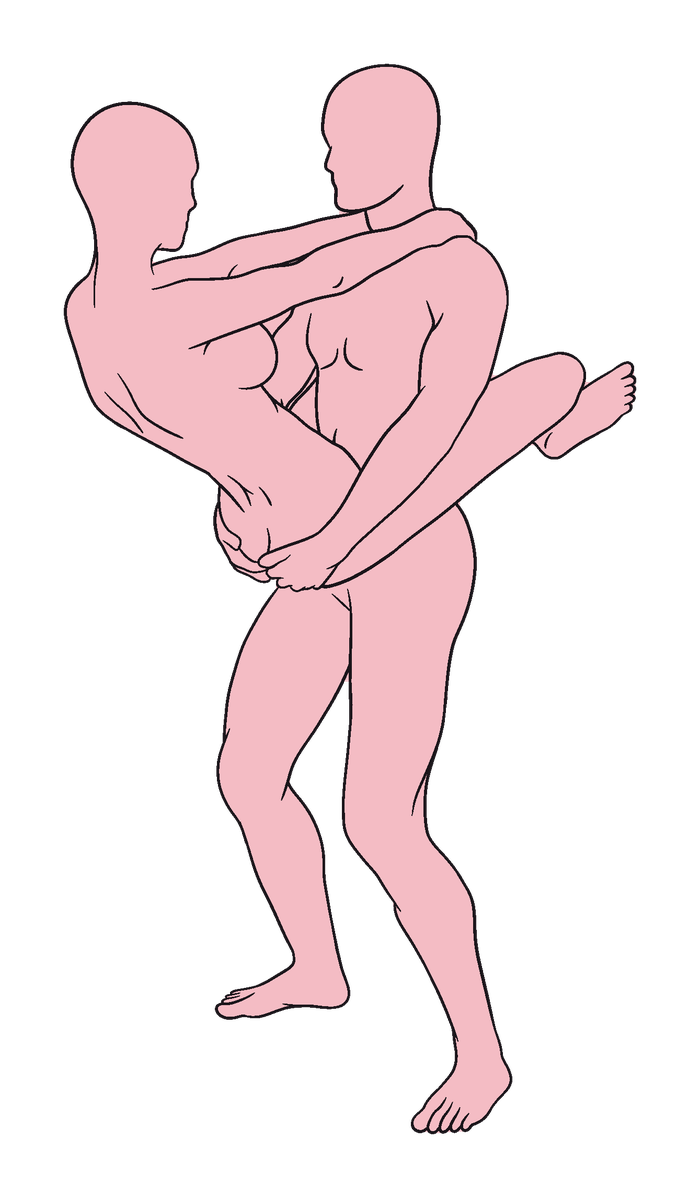
A close, compact standing embrace — the silhouette stays tight together rather than spread out.
3. Leg Up Dancer
Similar to Wrapped Dancer — standing face to face, one leg lifted around the standing partner's hip — but with more room between the two bodies and more reliance on the standing partner's grip and planted footing. Soft, uneven sand under both sets of feet makes the footing itself less predictable than it would be on solid ground, so settle it before anything else. Full entry in the glossary.
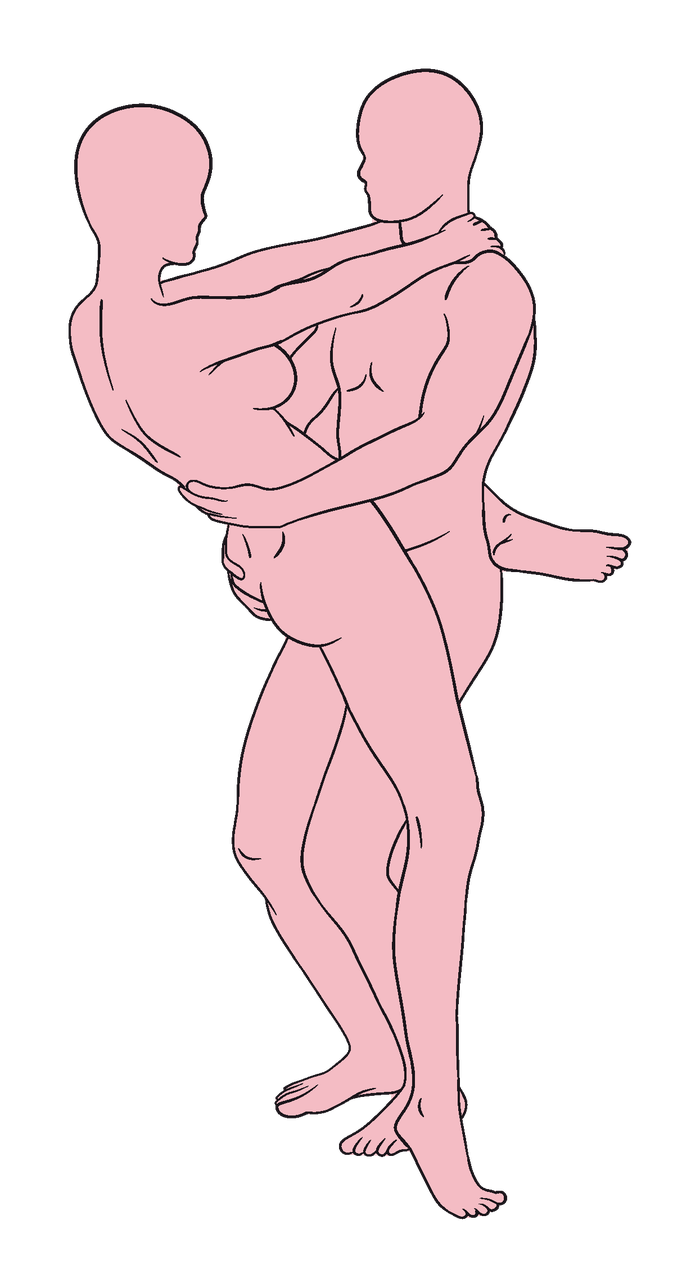
More separation between bodies than Wrapped Dancer — test the footing on sand before committing weight to it.
4. Standing Doggy
Both partners standing, the receiving partner folded forward to roughly horizontal with no wall, rock, or furniture involved at all — just their own hamstrings and lower back holding the position. It's the most exposed option here, both in terms of balance and in terms of visibility, so it's the one that actually needs a genuinely secluded spot rather than just a quiet-looking one. Full entry in the glossary.
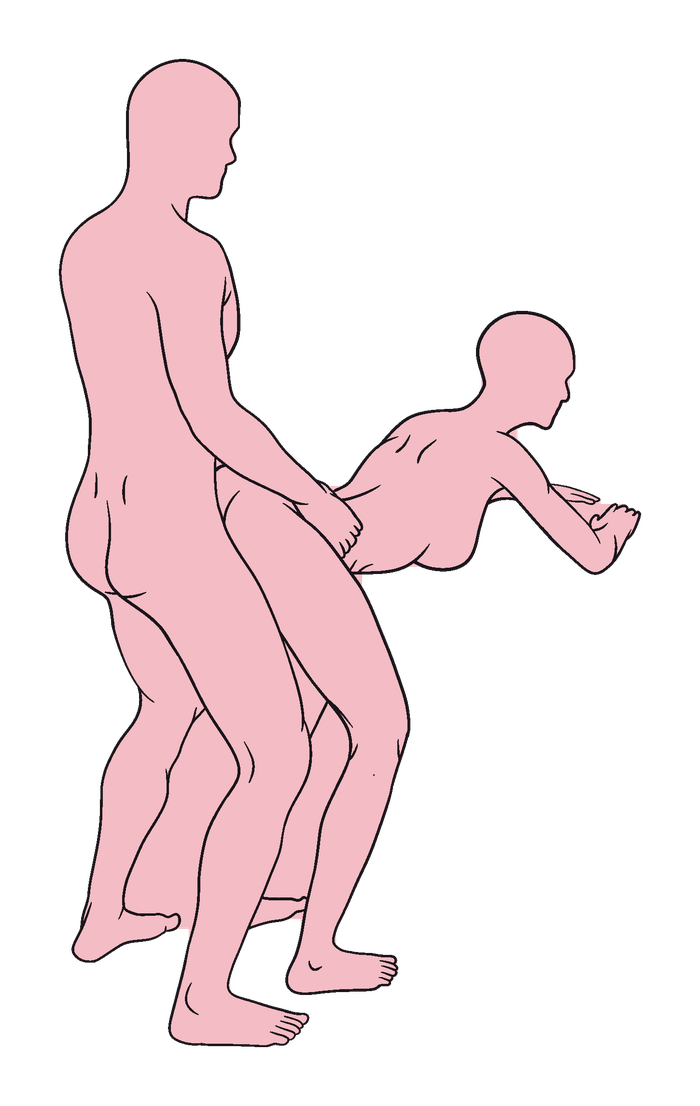
No brace point and no cover — this one only works with a spot that's actually secluded, not just quiet-looking.
What actually matters more than the position
- "Secluded" needs to be verified, not assumed. A cove or dune that looks empty can still be visible from a trail, a boat, or a house above the waterline — scope the spot in daylight first if possible, and remember that public indecency laws apply on public beaches regardless of how private it feels in the moment.
- Silicone-based lubricant holds up far better than water-based in humidity and near water, and it won't wash away or dilute the way water-based formulas do. See our lube guide for specific picks.
- Sand that reaches a condom compromises it — if sand gets on hands or genitals, treat that as a moment to stop and rinse or wipe clean rather than continuing.
- Dusk, early morning, or an off-season visit cut down on foot traffic more reliably than any specific position choice does.
What makes these positions easier
Clove's guides to the props and toys that pair well with the positions on this page.
Get the free Clove starter guide
The easiest positions to try first, lube basics and our tested picks, sent to your inbox. Then one practical guide a week. No spam, unsubscribe anytime.