

Standard standing positions assume a dry, grippy floor and a bed or wall at a normal height. A shower changes both of those at once — the floor has less traction than almost any other surface in the house, and the walls are usually tile rather than drywall, which is actually good news since tile can take a braced hand or back without giving. The positions below are ordered from the most stable to the most balance-dependent, not by how demanding they are otherwise.
1. Kneeling Bodyguard
Both partners kneel on the shower floor facing the same direction, the other partner close behind with chest pressed to your back, arms wrapped around the front. Kneeling puts your center of gravity low and both sets of knees in contact with the floor, which is the single lowest-risk option on this list if the tile feels genuinely slick. Full entry in the glossary.
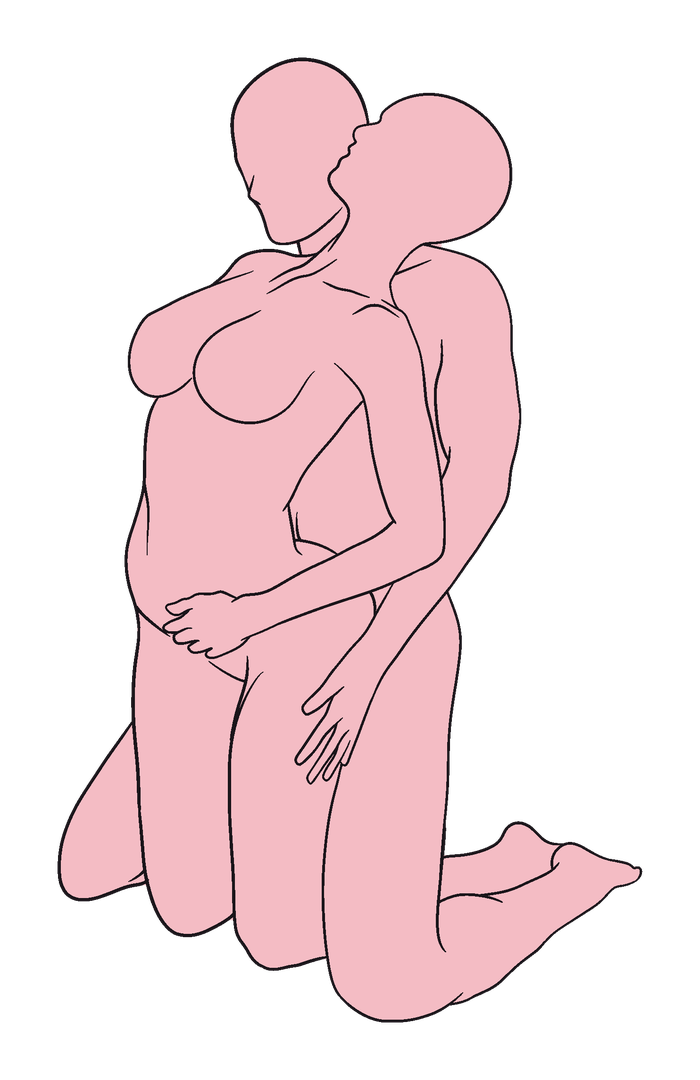
Both partners kneeling, low center of gravity — the safest starting point if the floor feels slippery.
2. Bodyguard
Stand facing the same direction, pressed close together, leaning back against the other partner's chest with an arm wrapped around from behind. This is the position a shower wall is built for — the receiving partner's back against tile turns an unsupported standing hold into a genuinely stable one. Full entry in the glossary.
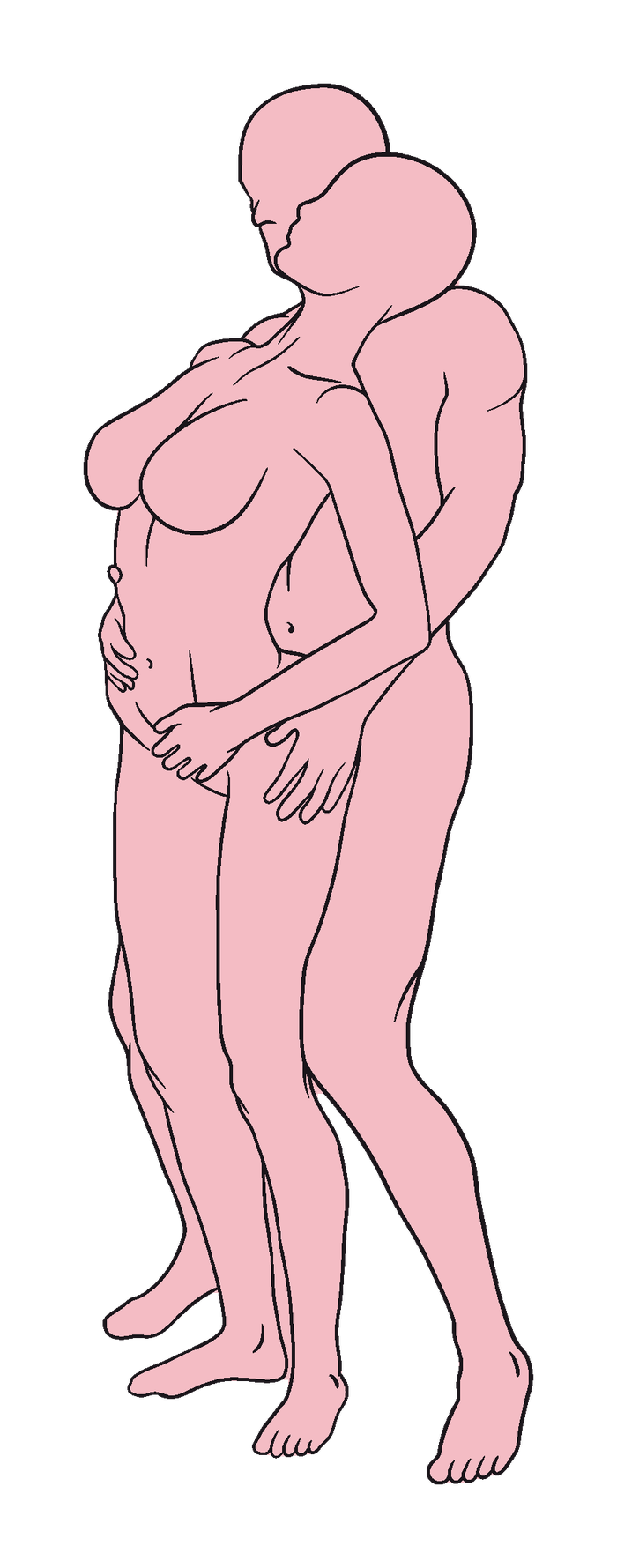
Standing, back against the shower wall — the wall is doing real stabilizing work here, not just decoration.
3. Supported Dancer
Stand face to face in a close embrace, and lift one leg with the knee bent, hooking it around the other partner's hip while they support you with a hand cupped under the buttock. Both of the standing partner's feet stay planted, which makes this a comparatively steady entry into single-leg positions — keep the standing leg's foot flat rather than up on the ball of the foot. Full entry in the glossary.
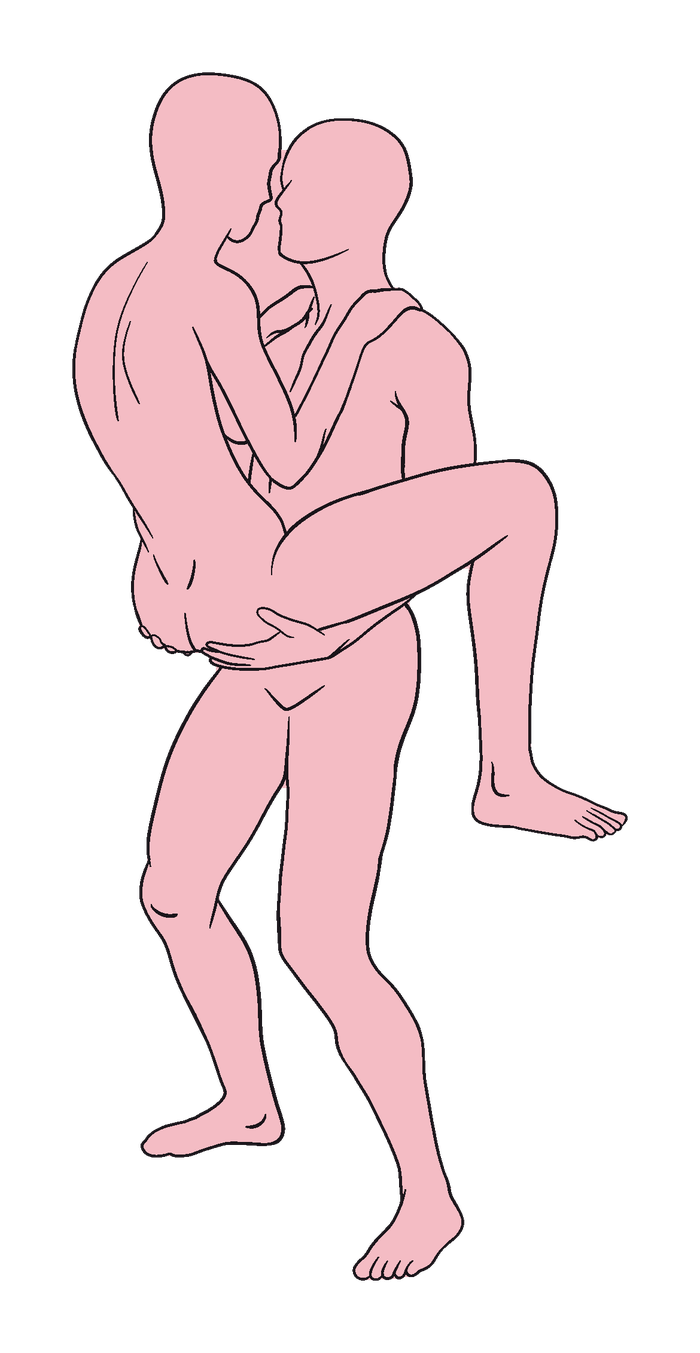
A supported single-leg lift, face to face — both of the standing partner's feet stay flat and planted.
4. Standing
Both partners standing, facing each other or with one partner behind. It takes real core and leg strength to hold on a dry, grippy floor, and shower tile removes a meaningful amount of that margin — a wall or the shower's corner to lean into does more here than it does anywhere else on the site. Full entry in the glossary.
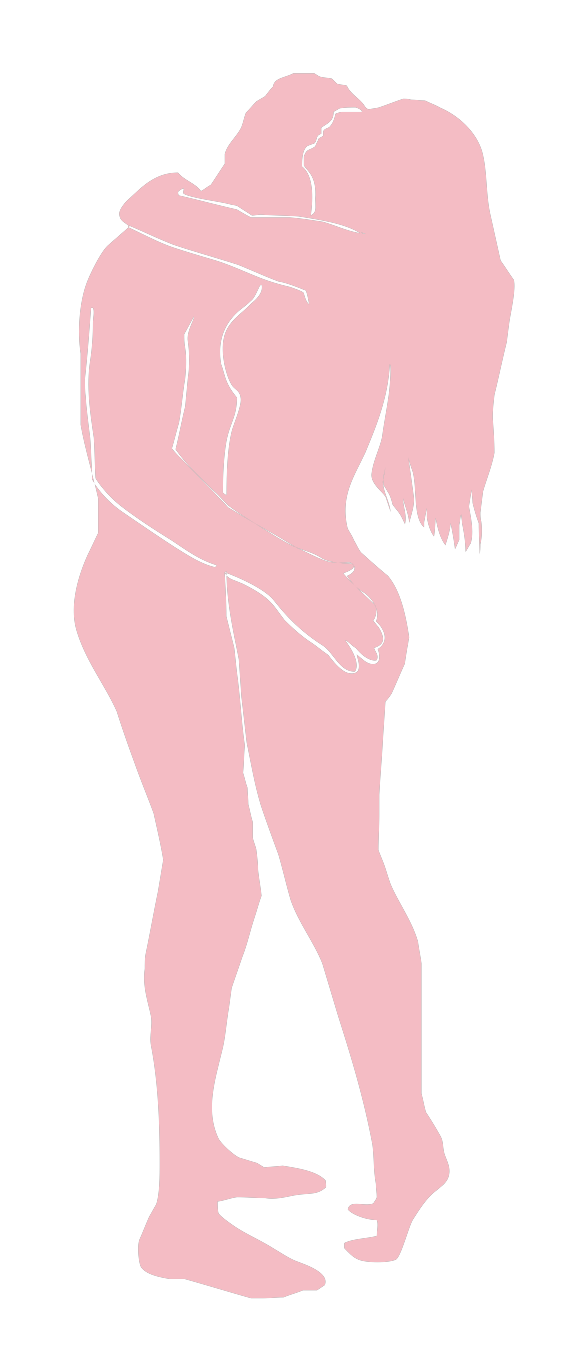
Standing, unsupported by default — lean into a wall or corner rather than trying to hold this freestanding on wet tile.
5. Folded Standing Doggy
Fold fully forward at the hips, legs straight, hands reaching down toward the shower floor, while the other partner stands upright behind and steadies you with a hand on the lower back. Reaching for the floor gives you a second and third contact point beyond your feet, which actually helps balance on tile rather than fighting it — just make sure whatever you're reaching for isn't slippery either. Full entry in the glossary.
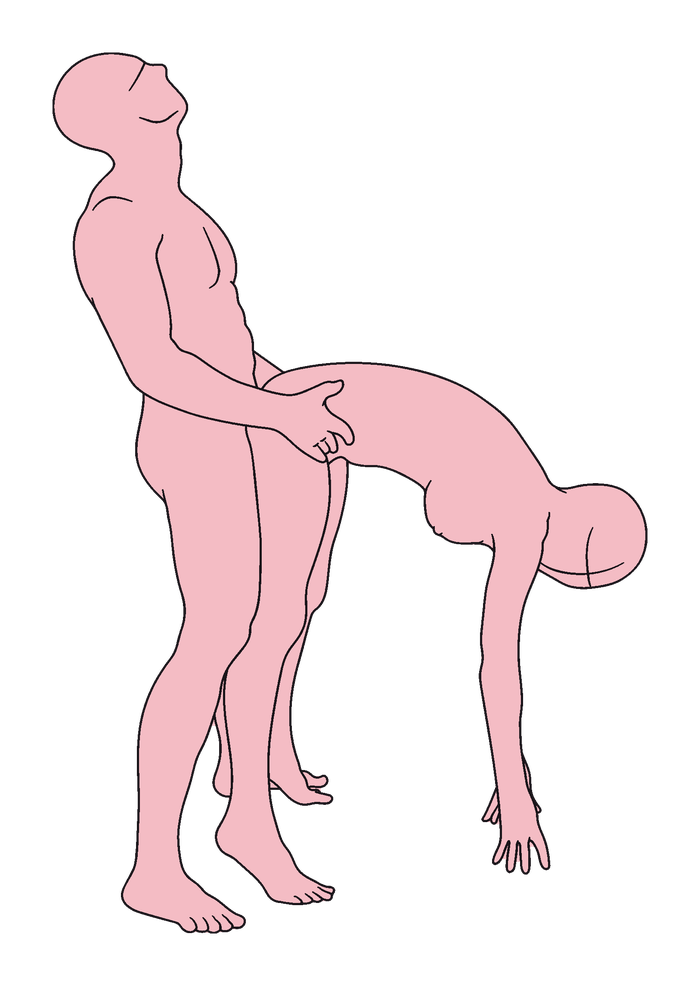
Folded forward with hands reaching toward the floor — extra contact points that genuinely help balance on wet tile.
What actually prevents a fall
- A non-slip mat or textured strips on the shower floor matter more than which position you pick — this is the single highest-leverage thing on this list.
- Grab bars, if the shower has them, are for holding onto — use them the same way you'd use a wall or doorframe in a standing position anywhere else.
- Soap and shampoo residue are slicker than plain wet tile, so positions that involve real balance are safer near the start of a shower than the end, before suds build up on the floor.
- Water-based lubricant washes away faster than it would elsewhere, and standard water-based formulas aren't built for shower use at all — see our lube guide for silicone-based options that hold up better wet.
What makes these positions easier
Clove's guides to the props and toys that pair well with the positions on this page.
Get the free Clove starter guide
The easiest positions to try first, lube basics and our tested picks, sent to your inbox. Then one practical guide a week. No spam, unsubscribe anytime.