

First trimester
Physically, there's usually no need to change much in the first trimester — the belly hasn't grown enough to be a factor yet. The bigger issues tend to be nausea, fatigue, and breast tenderness, which are worth working around more than the position itself.
- Side-lying spoon: low energy, no weight on the abdomen, and easy to stop or slow down if nausea hits without warning.
- Standard positions modified for tenderness: if breasts are sensitive, communicating that upfront avoids the most common early-pregnancy discomfort in otherwise familiar positions.
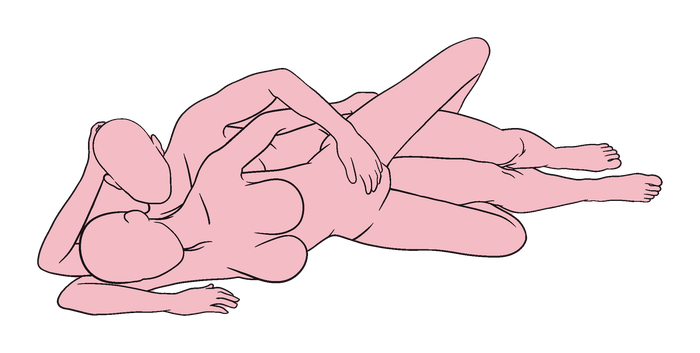
Side-lying, the receiving partner leaning back against the other partner who enters from behind — low energy, nothing on the belly, and easy to slow down or stop.
Second trimester
Often called the most comfortable stretch of pregnancy for a lot of people — energy tends to return and nausea usually fades, but the belly is starting to become a real factor in what's comfortable.
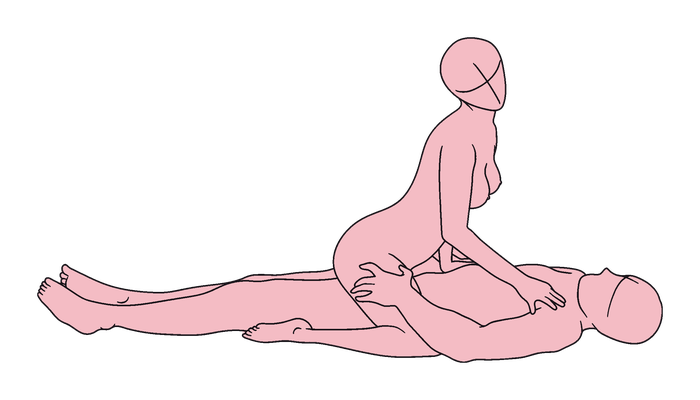
The receiving partner sits astride the other partner, facing them — keeping control of depth, angle, and pace while no weight rests on the belly. Full entry in the glossary.
- Partner on top, receiving partner controlling depth: the pregnant partner straddling or sitting keeps control over angle and pressure, which matters more as the belly grows.
- Edge-of-bed: pregnant partner lying with hips at the bed's edge, other partner standing — avoids any weight on the belly entirely and doesn't require lying flat for long.
Third trimester
Lying flat on the back for extended periods is generally discouraged later in pregnancy, since the weight of the uterus can press on major blood vessels and leave some people lightheaded. This is the trimester where side-lying and seated positions become the most practical default rather than just an option.
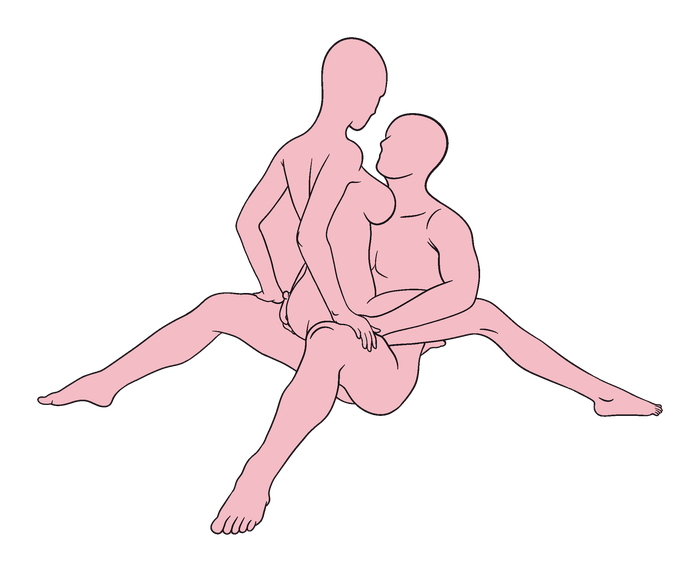
Shown on the floor but the same mechanics work on a chair or bed edge: the receiving partner straddles the seated partner's lap face to face, both upright, with nothing pressing on the abdomen. Full entry in the glossary.
- Side-lying, from behind: no weight on the belly, no need to lie flat, and easy to adjust with pillows for support. Our elevated spoon guide covers a low-energy, pregnancy-friendly version of this in detail, including where to add pillow support.
- Seated, facing each other: one partner seated on a chair or bed edge, the other straddling — keeps both partners upright, gives the pregnant partner full control over depth and pace, and avoids any pressure on the abdomen.
The same side-lying, from-behind shape as earlier in pregnancy — still nothing pressing on the belly, and a pillow between the knees helps as the belly grows.
General adjustments that apply throughout
For back pain: a pillow under the belly during side-lying positions and one between the knees reduces strain on the lower back significantly.
For balance: as the belly grows, positions that require standing balance without support become harder — a wall, headboard, or sturdy furniture nearby is worth using even in positions that don't strictly require it.
For changing energy levels: what worked in week 10 may not work in week 30, and that's expected rather than a problem — checking in regularly about what feels good matters more during pregnancy than almost any other time.
Communication note
Pregnancy is one of the times when comfort can change week to week, sometimes day to day. Treating "does this still feel good" as a normal, ongoing question — rather than something to figure out once and stick with — tends to work better than assuming last week's answer still applies.
What makes these positions easier
Clove's guides to the props and toys that pair well with the positions on this page.
Get the free Clove starter guide
The easiest positions to try first, lube basics and our tested picks, sent to your inbox. Then one practical guide a week. No spam, unsubscribe anytime.