

These are two separate topics that happen to share a common thread: both benefit from positions chosen deliberately rather than defaulted into. The first section is for anyone who wants to make use of above-average flexibility. The second is for anyone who wants positions built around solid support and stable contact rather than balance or stretch.
Flexible sex positions
If you're already comfortable with deep stretches, these positions use range of motion that most bodies don't have, generally trading some stability for depth or a more intense angle.
Folded Standing Doggy
- The receiving partner bends forward from the hips, hands on the bed, a chair, or the floor for support.
- Legs stay straight or slightly bent, depending on hamstring flexibility.
- The other partner enters from behind, using the receiving partner's hip height to set the angle.
What it's good for: a deep angle with minimal setup, though it asks a lot of the hamstrings over an extended session — pausing to straighten up periodically prevents cramping.
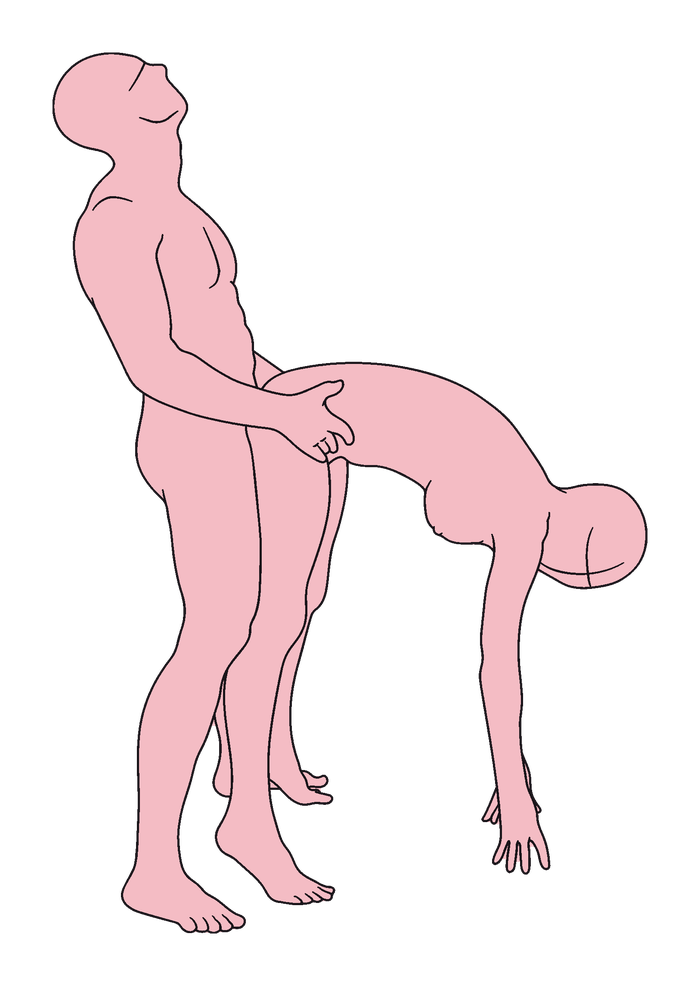
The receiving partner folds forward from the hips with legs straight and hands dropping toward the floor, while the other partner stands behind and lets hip height set the angle. Full entry in the glossary.
Upright Penetration Scissoring
- The receiving partner lies on their side, top leg lifted and resting over the other partner's shoulder or held upright against their chest.
- The bottom leg stays extended or slightly bent for balance.
- The entering partner kneels or half-kneels, supporting the lifted leg rather than letting it hang unsupported.
What it's good for: a narrow, deep angle without the balance demands of a standing position — the bed does the stability work instead of a standing leg.
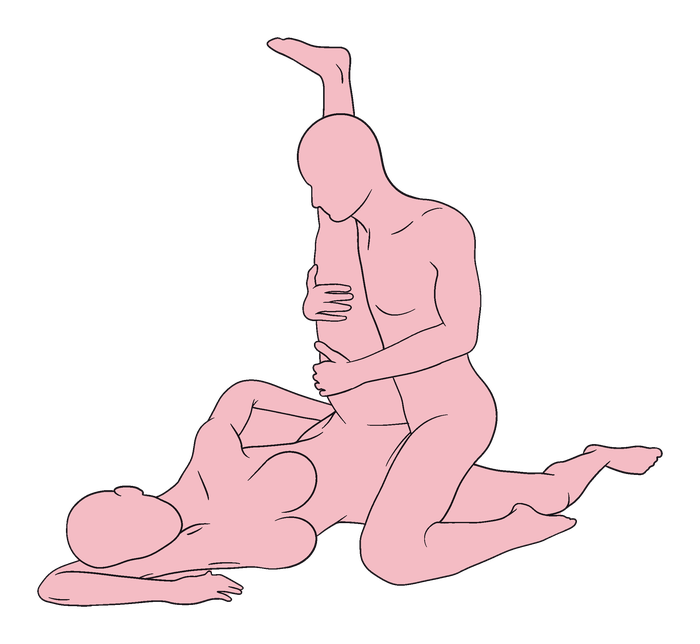
The receiving partner lies twisted onto their back and side with the bottom leg flat while the kneeling partner holds the lifted leg against their chest and shoulder, so the raised leg is supported rather than left hanging. Full entry in the glossary.
Plus-size sex positions
For larger bodies, the positions that work best usually aren't about flexibility at all — they're about weight distribution, stable contact points, and reducing how much either partner has to hold themselves up unsupported.
Missionary
Full-body support from the bed for both partners, and low on required flexibility or strength for either person — the receiving partner's legs can stay flat, bend up, or wrap around the top partner depending on what's comfortable. Nobody is holding themselves up unsupported, which is exactly the point. Full entry in the glossary.
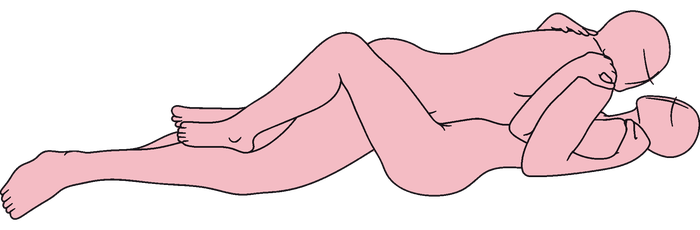
Face to face, one partner on top — the bed does the supporting for both people.
Cowgirl
The receiving partner sits or squats astride the other partner, controlling depth, angle, and pace directly rather than that control sitting with the partner underneath. Because the receiving partner sets the pace themselves, they can distribute their own weight however feels stable rather than adjusting to someone else's rhythm. Full entry in the glossary.
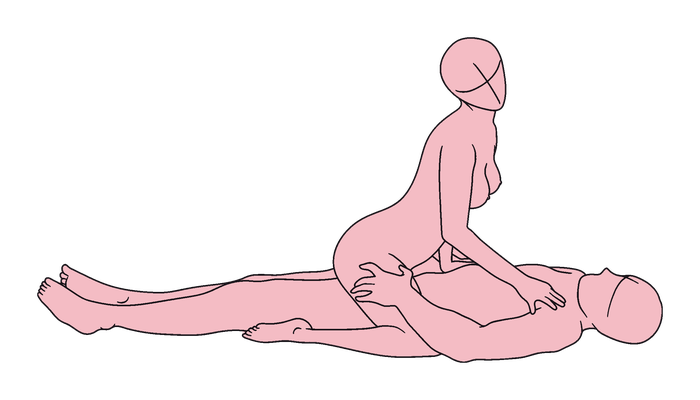
The receiving partner sits astride the other partner, facing them, in direct control of depth and pace.
Spooning
Both partners lie on their sides, stacked and facing the same direction, with the mattress supporting the full length of both bodies. Nobody braces, nobody balances, and the side-lying angle works regardless of body size or shape on either side. Full entry in the glossary.
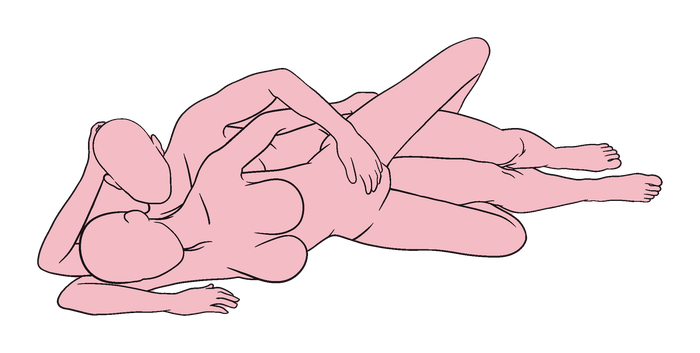
Side-lying and stacked, the mattress carrying the weight of both partners the whole way through.
Prone Bone
The receiving partner lies face down, propped on their forearms, while the other partner lies directly on top from behind, carrying their own weight forward on their arms rather than settling it onto the body underneath. That's the whole mechanic this family of positions needs: weight stays with whoever's carrying it, not with whoever's underneath. Full entry in the glossary.
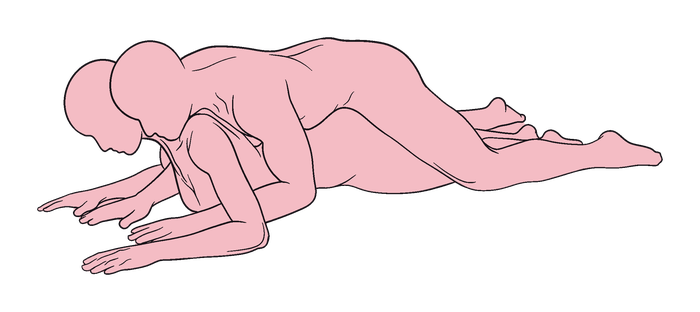
Stacked and prone, weight held on the top partner's own arms rather than resting on the partner underneath.
Lap Dance
The kneeling partner sits back on their heels while the receiving partner sits on their lap, both facing the same direction — two stable, seated contact points instead of one partner balancing or bracing. A cushion under the kneeling partner's knees and heels helps them hold the position longer, since that's where sustained load actually lands. Full entry in the glossary.
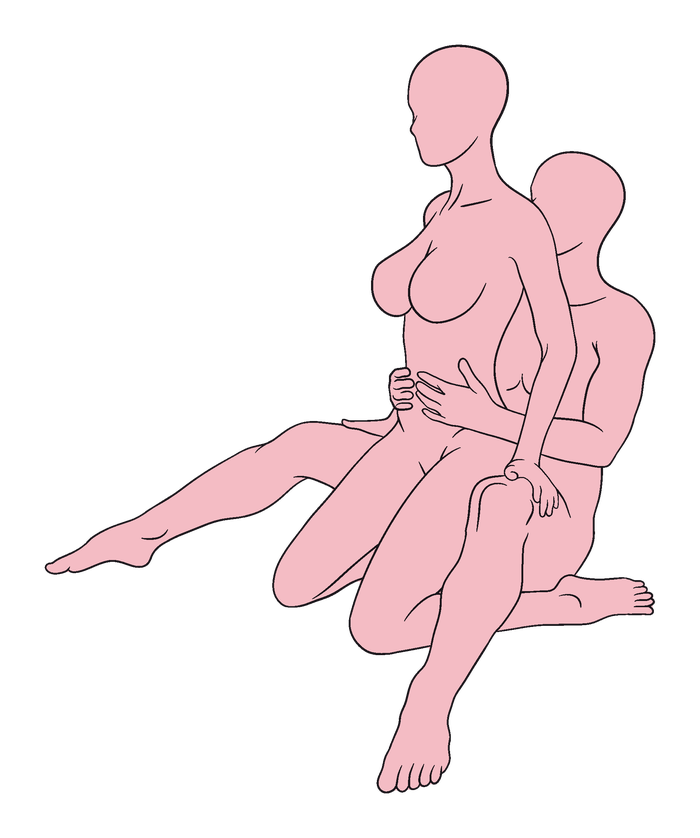
Seated on a kneeling partner's lap, facing the same direction — two stable seated points rather than one partner bracing.
Choosing between them
Flexibility and body size aren't opposites — plenty of people want elements of both, and there's no rule that a plus-size body can't use a flexible position or vice versa. The split above is about where each set of positions puts its emphasis: range of motion versus stable support. For a broader decision guide sorted by energy level and goal rather than body type, see our roundup of the best sex positions for couples.
What makes these positions easier
Clove's guides to the props and toys that pair well with the positions on this page.
Get the free Clove starter guide
The easiest positions to try first, lube basics and our tested picks, sent to your inbox. Then one practical guide a week. No spam, unsubscribe anytime.